



This Week At MCC

MCC Office •
September 30, 2026

14 Minute Read


Join us Oct 5–7 at Wonder Valley Camp for the MSM Mission Retreat! Grades 6–12 will learn to "Experience God" with teaching from David B., grow through team-building, and complete hands-on service projects to impact the camp long-term.
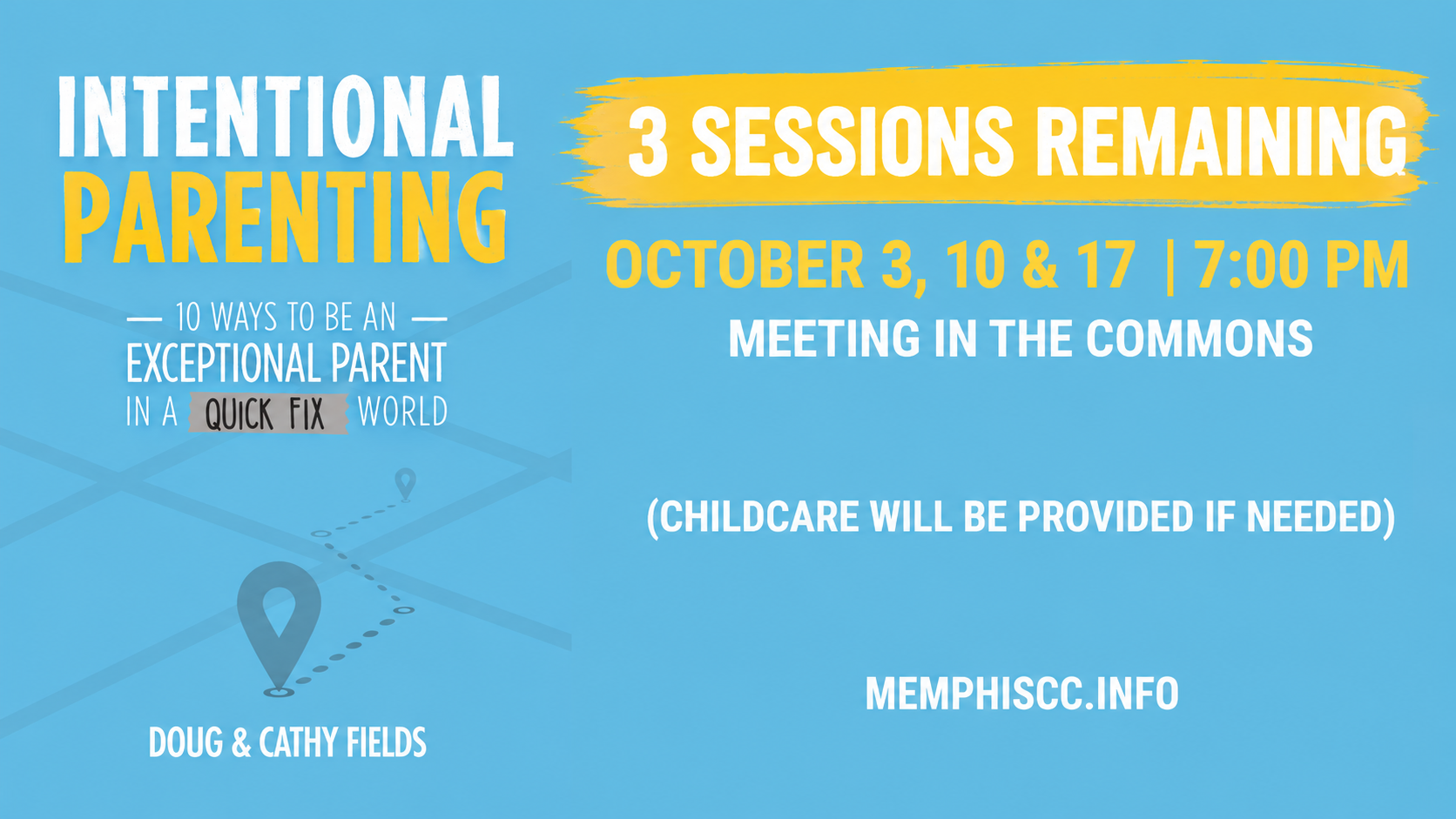


What you do as a parent or caregiver every day matters! Since your children didn't arrive with a "how to" manual, sometimes we resort to quick fix parenting. Spend 5 Saturday evenings with us as we navigate the landmines of parenting with an intentional plan.
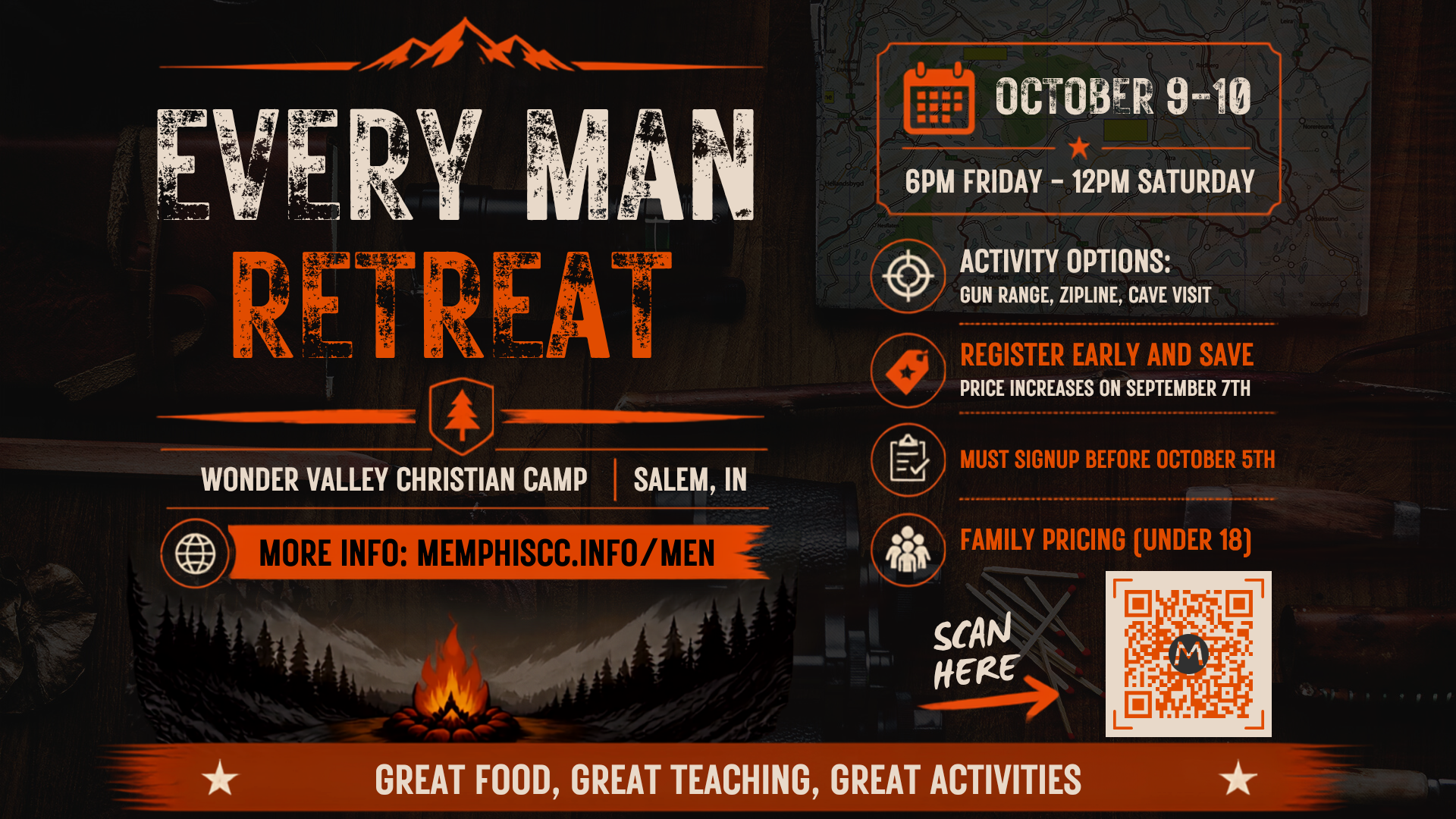

The Men of MCC invite you to join us on October 9th & 10th for some great food, teaching, fellowship, and activities at Wonder Valley Christian Camp in Salem.

This year's community Fall Festival will be on Saturday evening, October 31st. This is a great opportunity to love our community as more than 1,000 people will be on our property for trunk or treat, chili, hayrides, live shows, and more!

There is still a need for over 50 Team Members to be on the front lines. Please consider signing up.THESE SPOTS GO QUICK SO DONT DELAYClick below to claim your spot today!

"Consequences of Sin"

Key Scripture: John 19:17-30; James 1:13-15

Very few people use the word “sin” today. Instead, we hear people speak of mistakes, failures, and poor decisions. We like to say “dysfunction” instead of “sin,” “personality” instead of “rebellion,” “self-improvement” instead of “repentance”. Yet Scripture never softens the language. Sin entered the world in Genesis 3, and from that moment every human relationship, family, heart, and nation, has been affected. The greatest evidence that sin is real is found at the cross of Jesus.


John Chapter 19 says, “Carrying his own cross, he went out to the place of the Skull (which in Aramaic is called Golgotha). There they crucified him, and with him two others—one on each side and Jesus in the middle. Pilate had a notice prepared and fastened to the cross. It read: Jesus of Nazareth, the king of the Jews. Many of the Jews read this sign, for the place where Jesus was crucified was near the city, and the sign was written in Aramaic, Latin and Greek. The chief priests of the Jews protested to Pilate, “Do not write ‘The King of the Jews,’ but that this man claimed to be king of the Jews.” Pilate answered, “What I have written, I have written.” When the soldiers crucified Jesus, they took his clothes, dividing them into four shares, one for each of them, with the undergarment remaining. This garment was seamless, woven in one piece from top to bottom. “Let’s not tear it,” they said to one another. “Let’s decide by lot who will get it.” This happened that the scripture (Psalm 22:18) might be fulfilled that said, “They divided my clothes among them and cast lots for my garment.” So this is what the soldiers did. Near the cross of Jesus stood his mother, his mother’s sister, Mary the wife of Clopas, and Mary Magdalene. When Jesus saw his mother there, and the disciple whom he loved standing nearby, he said to her, “Woman, here is your son,” and to the disciple, “Here is your mother.” From that time on, this disciple took her into his home. Later, knowing that everything had now been finished, and so that Scripture would be fulfilled, Jesus said, “I am thirsty.” A jar of wine vinegar was there, so they soaked a sponge in it, put the sponge on a stalk of the hyssop plant, and lifted it to Jesus’ lips. When he had received the drink, Jesus said, “It is finished.” With that, he bowed his head and gave up his spirit.” (John 19:17-30)


The crucifixion of Jesus is the visible picture of sin’s actual impact on humanity. When we look at Calvary, we are not only seeing the suffering of Jesus, we are seeing the consequences of sin fully played out. James describes the progression of sin this way: “But each person is tempted when they are dragged away by their own evil desire and enticed. Then after desire has conceived, it gives birth to sin, and sin, when it is full-grown, gives birth to death.” (James 1:14-15)


We talk about sin as though it is simply a list of things we are not supposed to do. But if we really want to understand what sin looks like, we need to look at the details surrounding Jesus leading to his crucifixion. Here we see what sin actually does when it is allowed to run its course.


The first thing John and the other Gospel writers point us to, is the reality of sin that comes through jealousy. In this case, it’s the jealousy of the most religious. Here is what we learn. We can know Scripture and still be consumed with ourselves and reject God when He doesn't fit what we want. Religion without surrender is still sin.


John doesn't use the word "jealousy" the way Matthew and Mark do, but we know that jealousy and self-interest were driving the religious leaders who held the life of Jesus in their hands. Matthew says Pilate “knew it was out of self-interest that they (the religious leaders) had handed Jesus over to him.” (Matthew 27:18) Mark says Pilate knew that the chief priests had handed Jesus over to him “out of envy.” (Mark 15:10)


Think about that. These were religious leaders. They knew Scripture. They knew the promises of God. They had spent their lives studying the Word of God. And yet jealousy blinded them to the Son of God standing directly in front of them. How? “Jealousy takes our eyes off what God has given us and fixes them on what someone else has”. (it’s the unmet desire waring within us James was talking about in verse 14)


Think about it. Jealousy can cause us to resent a coworker because they received the promotion we wanted. It can cause a husband or wife to become threatened by the attention their spouse receives. It can cause Christians to become jealous when another person is recognized, blessed, successful, or used by God. Jealousy says, "Why them and not me?"


When jealousy takes hold, we begin treating people as obstacles rather than people created in the image of God. The religious leaders were so consumed with protecting their position that they were willing to eliminate the One who stood in front of them. Anyone struggle with jealosy? We all do. We all sin in this way.


From jealousy taking root, we see lies and the manipulation of truth. Sin twists and manipulates truth by using truth selectively. Sin can take something true and use it dishonestly to accomplish something false. John 18:19-21 records the questioning of Jesus by the high priest. Jesus essentially says, "Ask those who heard me." His teaching had been public. Further details tell us that this wasn’t an honest search for truth. They had already determined what they wanted the outcome to be. Matthew 26:59-60 says, “The chief priests and the whole Sanhedrin were looking for false evidence against Jesus so that they could put him to death. But they did not find any.” (Matthew 26:59-60a)


Ever exaggerate details in order to make sure another person is discredited? Ever leave out critical information when helping someone else reach a conclusion? I used to tell the story of a member of the worship team that used prayer time as an opportunity to gossip.


Sometimes the lie isn’t what we say to someone else. Sometimes the lie is what we tell ourselves. "It's not that big of a deal." "Everybody does it." "I can stop whenever I want." "I deserve this."


Next, John shows us one of the subtle consequences of sin. Sin doesn't always look like hatred. Sometimes sin looks like cowardice. Sometimes it looks like compromise. Sometimes sin looks like knowing what we should do but refusing to do it because doing the right thing will cost us something. James 4:17 says, “If anyone, then, knows the good they ought to do and doesn't do it, it is sin for them.” (James 4:17)


Pilate repeatedly recognized that Jesus was not guilty. In John 18:38, Pilate asks, “What is truth?” and then tells the Jewish leaders, “I find no basis for a charge against him.” (John 18:38) Pilate knew something was wrong. He knew Jesus hadn’t committed the crime for which they wanted Him executed. But knowing what is right and doing what is right are two different things. John 19:12 tells us that the Jewish leaders pressured Pilate, saying, “If you let him go, you are no friend of Caesar.” And so “Finally Pilate handed him over to them to be crucified.” (John 19:12, 16) Pilate knew the right thing. He had the authority to act. But he refused to act because doing the right thing would have cost him something.


We like to blame Pilate for his cowardice, but we’ve all been there. We know we should speak up when someone is being mistreated, but we remain silent. We know that the group we are a part of is doing something wrong, but we don’t want to be excluded. We know an issue needs to be confronted in our marriage, but confrontation is uncomfortable. Sometimes sin says, "I know what is right, but I don't want to pay the price for doing it."


Then there is ignorance and spiritual blindness. Sin can distort our ability to see reality correctly. John's Gospel begins by telling us exactly who Jesus is in Chapter 1. “He was in the world, and though the world was made through him, the world did not recognize him. He came to that which was his own, but his own did not receive him.” (John 1:10-11) In chapters 18 and 19 we see that truth played out in real time. The One the Scriptures pointed toward is standing in front of them, and they reject Him. He who came to save them is standing in front of them, and they demand His death. Sin blinds us. “The god of this age has blinded the minds of unbelievers, so that they cannot see the light of the gospel that displays the glory of Christ.” (2 Corinthians 4:4) They had the Scriptures. They had the prophecies. They had the promises. Sin doesn't just make us do wrong things. Sin can distort our ability to see reality correctly.


We can be warned about the destructive nature of an addiction and still believe we have it under control. A person can hear the truth of the Gospel over and over and still convince themselves that they don't need God. A person can repeatedly hurt their family and convince themselves that everyone else is the problem. Sin whispers, "You don't have a problem." "You're fine." "You don't need to change." Sometimes the most dangerous blindness is the blindness that doesn't know it is blind.


We see something else about the consequence of sin at Calvary. Sin dehumanizes. John 19:1-2 says, “Then Pilate took Jesus and had him flogged. The soldiers twisted together a crown of thorns and put it on his head. They clothed him in a purple robe.” Then they mocked Him. Matthew says they “spit in his face and struck him with their fists.” (Matthew 26:67) Mark says they “struck him on the head again and again with a staff and spit on him.” (Mark 15:19) Think about what is happening. These people are no longer treating Jesus as a person. They are treating Him as an object. They mock Him. They beat Him. They spit on Him. They strip Him of dignity. They eventually nail Him to a cross. Sin dehumanizes.


We see it when an angry person destroys another person's dignity with words. We see it in domestic abuse. We see it in bullying. We see it in racism and hatred. We see it when pornography turns a person created in God's image into an object for personal gratification. When sin takes over, we stop seeing people as people and start seeing them as an obstacle, an enemy, an object, or a means to get what we want.


Finally, we see sin isolates, divides, and damages relationships. John 18:15-18 tells us that while Jesus was being interrogated, Peter followed Jesus into the high priest's courtyard but stops there. When he was questioned about being one of Jesus' disciples, Peter denied it. “He denied it, saying, ‘I am not.’” A little later, when asked again, Peter denied Jesus a third time. “Again Peter denied it, and at that moment the rooster began to crow.” (John 18:25, 27)


Notice, Peter is physically separated, or isolated, from Jesus while Jesus is being interrogated. The other disciples have scattered. Isolation is Satan’s greatest weapon. Peter loved Jesus. Peter had walked with Jesus. Peter had declared that he would never abandon Him. But fear took control, and Peter denied the very relationship he had. Ever find yourself alone saying “I can handle this myself”? Addiction isolates. Shame isolates. Bitterness isolates. Unforgiveness isolates. Pride isolates. Anger isolates.


The painful reality about sin is given to us in Romans. “For all have sinned and fall short of the glory of God.” (Romans 3:23) Not "some people have sinned." Not just the Romans, not just the religious Jews, but ALL have sinned. That means we can’t stand at the foot of the cross pointing our fingers at Caiaphas and Pilate and the soldiers and say, "Look at what their sin did to Jesus." We also can’t look at the cross and see only Jesus suffering. The cross forces us to look at ourselves and realize My jealousy. My dishonesty. My cowardice. My rebellion. My pride. My unforgiveness. My sin put Him there. And someone has to bear the consequences of sin.


“He himself (Jesus) bore our sins” (1 Peter 2:24a) in his body on the cross. That is what we see at Calvary. We see what sin does. But we also see what God does with sin. Jesus takes it. Jesus bears it. Jesus pays for it.


The cross reveals how serious our sin is and how serious God's love for us is. After Jesus rose from the dead, Peter stood before thousands in Acts chapter 2. Notice what Peter did. He explained the consequences of sin when he preached Christ crucified. "This man was handed over to you by God's deliberate plan... and you, with the help of wicked men, put him to death..." (Acts 2:23) Verse 37 says. "When the people heard this, they were cut to the heart..." For the first time they recognized the consequences of sin. They understood, "We did this." Not Rome, not the high priests, not the religious, not the Jews, “Our” sin placed him there. Nailed him there. And so the people cried out, "Brothers, what shall we do?" Peter gave three responses. Repent – change directions. Repentance begins with acknowledging sin. David prayed in the Old Testament: "Against you, you only, have I sinned..." (Psalm 51:4) Can you say that with me – “I’ve sinned against you, God”


Be Baptized “every one of you in the name of Jesus Christ for the forgiveness of your sins." Throughout Scripture, water represents cleansing. We just looked at this a couple of weeks ago. But there is more. Romans 6:3 points out that in baptism we participate in Christ's death, burial, resurrection. "Or don't you know that all of us who were baptized into Christ Jesus were baptized into his death?" (Romans 6:3) The water does not possess the power. It is God who saves. But God has given baptism as the moment in which believers publicly and obediently unite themselves with Christ's saving work, identifying with His death, burial, and resurrection and receiving the forgiveness He promises through faith. Have you? Have you publicly and obediently responded to Jesus death, burial, and resurrection? Won’t you today?


Receive the Holy Spirit "...and you will receive the gift of the Holy Spirit."

God does not simply forgive us and send us away. He comes to live within us. The Spirit continually sanctifies (forgives, cleanses, transforms) us, empowering us to resist sin and assuring us that we belong to God. Though believers still struggle against sin, Christ's righteousness covers us, and the Spirit works to transform us into His likeness until the day of redemption.


Today every one of us stands where that Jerusalem crowd once stood. The question remains. "What shall we do?" The answer has never changed. Repent, be baptized, receive the gift of the Holy Spirit. I’ll see you at The Gathering. Dave


Up Next
From this Collection: Blog
November 4, 2026 • 14 Minute Read
This Week At MCC
My Journey Through Grief - Fall Session Thursdays 6:30pm Nov 5th, 12th, 19th, Dec 3rd, 10th, 13th Facilitated by Pastor Dave Colbert in partnership with Terri Mullins, provides a safe, encouraging, and healing atmosphere for all who are experiencing grief.REGISTER Operation Christmas Child delivers great joy and the Good News of Jesus Christ to children in need around the world through gift-filled shoeboxes. Each box packed full of quality toys, school supplies, and personal care items becomes a tangible expression of God's immense love for the child. For many, it is their first gift ever! Delivered by our local church partners, shoebox gifts provide an opportunity to present the Gospel to boys and girls in a clear, child-friendly way. Drop off your filled shoebox at one of our weekend services November 14th or 15th.What Goes In My Shoebox?BUILD A BOX ONLINE Upper Elementary | 3rd - 6th Grade Students will enjoy a 3 - HOUR action packed evening where they will have opportunities to build connections, and grow in their relationships with one another. Sign up today!SIGN UP! "Persecution" Key Scripture: Acts 4; 5:11-41 There are some things in life that we can be “certain” will happen. We can be certain that life will bring both good days and difficult days, that seasons will come and go, and for the most part we are ok with that. But what Jesus describes in John is a certainty we don’t welcome, at least not at first. “In this world you will have trouble.” (John 16:33) For followers of Jesus, some of that trouble will come simply because we belong to Him. Sometimes it will come from the world around us because we live in a fallen world, but every once in a while, surprisingly, trouble comes from people who claim to represent God. This is what we see in Acts Chapters 4 and 5. The early church was growing, the apostles were preaching Jesus, people were being saved, and God was at work. With the growth, however, came opposition. The apostles discovered something every generation of Christians must understand. Sometimes following Jesus creates opposition resulting in persecution. But persecution does not mean God has stopped working. In fact, Acts shows us that “Sometimes the evidence that God is working most powerfully is found right in the middle of the resistance.” This is what I want us to learn as we look at a situation in Acts Chapter 4. Acts Chapter 4 opens up with Peter and John (two of Jesus’ disciples) being confronted by the religious authorities because they were teaching the people and proclaiming in Jesus the resurrection of the dead. The Sadducees were especially disturbed because they did not believe in the resurrection. You might remember, they were “sad, you see,” because they didn't believe Jesus rose from the dead. But what is remarkable is what happened while the religious leaders were becoming increasingly disturbed. “But many who heard the message believed; so the number of men who believed grew to about five thousand.” (Acts 4:4) The opposition was increasing, but so was the church. The religious leaders were trying to stop the message, but God was at work in the middle of their opposition. That gives us the first certainty we hold to when persecution comes. Persecution cannot stop what God is doing and is often evidence that God is at work. A year earlier, Jesus had told Peter and the disciples “And I tell you that you are Peter, and on this rock I will build my church, and the gates of Hades (Hell) will not overcome it.” (Matthew 16:18) The enemy may oppose the church, people may oppose your faith, governments may oppose Christianity, culture may reject Biblical truth, religious people may criticize you, friends may walk away from you, but none of that means God has stopped working. In fact, we are about to see that He is working all the more. Peter and John were brought before the rulers, elders and teachers of the law, and they were asked, “By what power or what name did you do this?” (Acts 4:7b) (The “this” they were referring to was a lame man healed by Peter right there in the temple courts that led to Peter sharing the gospel.) Peter could have become intimidated. He could have softened his answer. Instead, it tells us that Peter was filled with the Holy Spirit and answered them. “Rulers and elders of the people! If we are being called to account today for an act of kindness shown to a cripple and are asked how he was healed, then know this, you and all the people of Israel: It is by the name of Jesus Christ of Nazareth, whom you crucified but whom God raised from the dead, that this man stands before you healed. Salvation is found in no one else, for there is no other name under heaven given to men by which we must be saved.” (Acts 4:8-10; 12) In our early years here at MCC, as the church began to grow, some of the folks in the church questioned our methods. A worship minister who had tattoos, students wearing hats when they played instruments on stage. One of our elders came to me and said, “Don’t be concerned with the criticism. You can’t argue with the results. People are being baptized every week.” Peter wasn't defending a religious opinion. He was declaring a truth that couldn’t be negotiated. Jesus is not one option among many. Jesus is the only source of salvation. Jesus is the authority, and Peter wouldn’t back down. It’s the second certainty God is revealing to us here. Persecution reveals the strength of our witness. “When they (the authorities) saw the courage of Peter and John and realized that they were unschooled, ordinary men, they were astonished, and they took note that these men had been with Jesus.” (Acts 4:13) I love that phrase, “they had been with Jesus.” Jesus had changed them. That ought to be the testimony of our lives. When people watch us under pressure, what do they see? When someone criticizes our faith, or attacks what we believe, how do we respond? When our Christian values are mocked, do people see anger, arrogance and defensiveness, or do they see the character of Christ? Persecution doesn't create our character, it reveals our character. Anyone can talk about faith when everything is going well, praise God when the bills are paid, the family is healthy and life is comfortable. But when you are excluded because of your convictions, called names because you will not compromise, or treated unfairly because you follow Jesus, that is when the world gets to see whether Jesus really has changed us. Peter and John were courageous, but their courage wasn’t arrogance. Their boldness wasn’t hostility. They simply refused to deny Jesus. Verse 18 says the authorities then commanded them not to speak or teach at all in the name of Jesus. Peter and John responded, “Judge for yourselves whether it is right in God’s sight to obey you rather than God. For we cannot help speaking about what we have seen and heard.” (Acts 4:19–20). Notice, Peter didn't say, “We think this is true.” He said, “We have seen it. We have heard it. We know it.” There are things about our faith we may not understand completely, questions we may not be able to answer, or circumstances we may not be able to explain, but there is something we can know. Jesus is Lord, Jesus died for our sins, Jesus rose from the dead, Jesus saves, and Jesus is still at work. Verse 21 says the authorities eventually released Peter and John. Notice where they went? They didn’t go cower in the corner, have a pity party, or post to Facebook. They went to The Gathering. They went to their church family and prayed. (Remember last week – “The church is a family connected by prayer and a commitment to be present”) Verse 24 says “...they raised their voices together in prayer to God.” This is the third certainty we discover. Persecution invites us to pray. The church didn't gather to develop a strategy for revenge. Look at their prayer. “Sovereign Lord, you made the heaven and the earth and the sea and everything in them. You spoke by the Holy Spirit through the mouth of your servant, our father David: Why do the nations rage and the peoples plot in vain? The kings of the earth take their stand and the rulers gather together against the Lord and against his Anointed One. Indeed Herod and Pontius Pilate met together with the Gentiles and the people of Israel in this city to conspire against your holy servant Jesus, whom you anointed. They did what your power and will had decided before hand should happen. Now Lord, consider their threats and enable your servants to speak your word with great boldness. Stretch out your hand to heal and perform miraculous signs and wonders through the name of your holy servant Jesus.” (Acts 4:24-30) They didn't pray that God would destroy their enemies. They didn't ask God to make the persecution disappear. They acknowledged God's sovereignty and asked Him for boldness to continue doing what He had called them to do. Remember last month the model Jesus gave us when praying? How we are to acknowledge who it is that we are speaking to and ask Him to align our circumstances and desires with His will. To ask Him for what we need today in order to be faithful. “Enable us….” “Stretch out your hand and heal….” “Show yourself Lord…” “After they prayed, the place where they were meeting was shaken. And they were all filled with the Holy Spirit and spoke the word of God boldly.” (Acts 4:31) You talk about things backfiring on those who set out to persecute the church. What they hoped to stop, or at least stifle, resulted in an explosion of faith and boldness flowing from God through the Church. I think about this sometimes in our worship together at The Gathering. How it is that sometimes we cry when we are in this place. How when we embrace the truth of the words we are singing, when these words become prayers, that we are shaken to the core, we are moved, we are motivated, as God fills us back up. What would have happened if they had prayed “get me out of this” when God wanted them to pray “get me through this”? There is nothing wrong with asking God to remove persecution. Jesus Himself prayed in Gethsemane for the cup to be taken from Him. But where did Jesus land in his prayer? “But not my will, but yours be done!” And that brings us to Acts chapter 5. The apostles were arrested again. But notice it’s not for leading a rebellion, but helping people, healing people. They had already been threatened, warned, and told to stop but now they are arrested again. We sometimes assume that if we stand firm once, the battle should be over, but Scripture doesn't promise that. In verse 18 the apostles are placed in jail but during the night, an angel of the Lord opens the doors and brings them out. And then the angel gives them an unusual command, “Go, stand in the temple courts, and tell the people the full message about this new life.” (Acts 5:20). God released them so they could go back and preach. In the same way God does not simply deliver us from something, He delivers us for something. Remember the whole purpose of our life as Christ followers, as The Church, is to bring Glory to God, to point the world to Jesus. We have been released from the bondage of sin so that we can tell somebody else about new life in Christ. We have been forgiven so that we can tell others where forgiveness is found. Rescued from our past so that we can point others toward their future. So don't waste your freedom. Don't waste the story of what God has done in your life. The apostle Paul spoke of his difficulties, both in times of persecution as well as personal suffering, many times. “I consider that the sufferings of this present time are not worth comparing with the glory that is to be revealed in us.” (Romans 8:18) The apostles went right back into the temple courts and started teaching again. Of course, the authorities found them and brought them before the Sanhedrin to reminded them, “We gave you strict orders not to teach in this name.” Peter and the apostles answered, “We must obey God rather than human beings” (Acts 5:28a, 29). There it is again. When obedience to God and obedience to people come into conflict, our ultimate allegiance belongs to God. Scripture teaches us to respect authorities, honor people, live peacefully, and submit to legitimate authority. But there is a line that cannot be crossed. We cannot obey people in a way that requires us to disobey God. In the Old Testament Daniel didn’t stop praying because the government commanded it. Shadrack, Meshack, and Abednego didn’t bow down because Nebuchadnezzar ordered it. The issue is “who will we allow to have the ultimate authority in our life?” Will it be fear, relationships, financial security, the expectations of others? Or is it God? I want to mention something interesting that happens. A guy named Gamaliel, a respected teacher of the law stood up and advised his fellow Sanhedrin to leave the apostles alone and let them go. His reasoning was simple. “For if their purpose or activity is of human origin, it will fail. But if it is from God, you will not be able to stop these men; you will only find yourselves fighting against God.” (Acts 5:38b–39) Gamaliel observation exposes an undeniable truth. Human opposition cannot ultimately defeat God's purposes. People can oppose God's work, delay God's work, or make God's work more difficult, but they cannot overthrow God. Just like we talked about last week, if God is in it, God will sustain it. And that leads us to where this account wraps up. The apostles were flogged and were ordered again not to speak in the name of Jesus. “The apostles left the Sanhedrin rejoicing because they had been counted worthy of suffering disgrace for the Name.” (Acts 5:41) How do you rejoice after being beaten, publicly humiliated, and threatened for your faith? You rejoice because suffering for Jesus reminds you whose you are. Last week I visited a friend whose father had passed away. 23 years ago I worked for this friend and had the privilege of driving his dad to Indianapolis to help take care of some business there. On our way, his dad told me about how at the age of twenty two, he found a field and he sold everything he owned so that he could buy that field. He was talking about hearing the gospel of Jesus Christ, surrendering his life to Jesus, and making the decision to follow Him. It was a decision that impacted the next 70 years of his life. That man understood something we sometimes forget. Following Jesus is worth everything. The apostles understood this. Jesus had been rejected, mocked, beaten, crucified, and now, as His followers, they were willing to suffer disgrace because they belonged to Him. They weren't celebrating pain, they were celebrating faithfulness. Christlikeness. Verse 42 says that day after day, in the temple courts and from house to house, they never stopped teaching and proclaiming the good news that Jesus is the Messiah. They never stopped. Jesus was worth it all. Have you stopped? What is it that has you discouraged in your faith wondering if Jesus has left you? Can you see today that persecution and difficulty is to be expected, but God is with us. He is at work in and around us and He will finish what he started. It’s up to us to buy the field, to go all-in and take our next step toward that finished work. Will you? Come and let’s pray, come and be part of this family, come and surrender your life to Jesus Christ. I’ll meet you at The Gathering. Dave
October 28, 2026 • 14 Minute Read
This Week At MCC
ALL TEAM MEMBER MEETING: TONIGHT Wednesday, OCT. 28 MDWK (7:00p - 7:30p) Immediately after MDWK Service, we will hold an ALL TEAM info/training session. We will provide overall details, expectations, and the heart of the event. Before you leave, you will meet with your Team Lead to get any further specific details. All donated food items must be dropped off at the MCC Kitchen by TODAY Wednesday, October 28.FALL FESTIVAL DONATION LIST If you would like to donate financially to help cover the cost of these items and addtional Fall Festival needs, you can do so by clicking the link belowDONATE My Journey Through Grief - Fall Session Thursdays 6:30pm Nov 5th, 12th, 19th, Dec 3rd, 10th, 13th Facilitated by Pastor Dave Colbert in partnership with Terri Mullins, provides a safe, encouraging, and healing atmosphere for all who are experiencing grief.REGISTER Upper Elementary | 3rd - 6th Grade Students will enjoy a 3 - HOUR action packed evening where they will have opportunities to build connections, and grow in their relationships with one another. Sign up today!SIGN UP! "The Church" Key Scripture: Acts 2-4; 1 Corinthians 12-13 Several years ago, three words caught my eye as I was reading through the gospel of John in the New Testament of my Bible. Those words were “Come and See”. In John chapter 1 when a man named Andrew discovered that Jesus was the Messiah, the Son of God, he went to his brother Peter and brought him to Jesus to see for himself. When a man named Phillip set out to follow Jesus, he went to his friend Nathanial and told him, “We have found the one Moses wrote about in the Law, and about whom the prophets also wrote – Jesus of Nazareth, the son of Joseph.” Then Nathanael responded, “Nazareth! Can anything good come from there?” “Come and see,” said Philip. (John 1:45-46) There are some moments in life that are forever imprinted in our minds because they are life altering moments. Moments that change our trajectory. Encounters that affirm or form our deepest beliefs. They are the moments we long to share with the people around us that they may “come and see” and experience these things for themselves. I think our encounter and relationship with The Church is one of those moments. At lease it can and should be. My question for you this weekend is how certain are you about the role the Church plays in your life as a Christ follower. Acts Chapter 2 has got to be one of the most action-packed chapters in the Bible. It captures Jesus’ assentation into heaven forty days after His resurrection from the dead, the arrival of the Holy Spirit, the first sermon preached by the Apostle Peter, the baptism of over 3,000 people in one day and ultimately, the birth of the early church. Can you imagine the “come and see” stories that were told after these encounters? “They (this group of believers, these folks who had just been baptized and received the Holy Spirit) devoted themselves to the apostles’ teaching and to the fellowship, to the breaking of bread and to prayer. Everyone was filled with awe and many wonders and miraculous signs were done by the apostles. All the believers were together and had everything in common. Selling their possessions and goods, they gave to everyone as he had need. Every day they continued to meet together in the temple courts. They broke bread in their homes and ate together with glad and sincere hearts, praising God and enjoying the favor of all the people. And the Lord added to their number daily those who were being saved.” (Acts 2:42-47) How did that addition occur? People came and met Jesus through The Church. From this brief, but detailed, picture of The Gathering of early believers, I want us to grab hold of four truths about The Church today, and address how our certainty about these “Come and See” moments are critical to us and the world around us. First, the church is devoted to the truth of God’s Word and the discovery that follows. Verse 42 begins by describing the believers’ devotion to the apostles’ teaching. They were hungry for more. Of the thousands baptized just days before, most knew very little beyond what Peter had preached to them. “How, then, can they call on the one they have not believed in? And how can they believe in the one of whom they have not heard? And how can they hear without someone preaching to them? (Romans 10:14) The truth of God’s Word shapes what we believe about God, sin, salvation, sexuality, marriage, forgiveness, generosity, holiness, and the way we treat other people. And we know the people responded to the teaching because of their actions. They wanted others to discover what they had found. James challenges us today, “Do not merely listen to the word, and so deceive yourselves. Do what it says. But whoever looks intently into the perfect law that gives freedom, and continues in it – not forgetting what they have heard, but doing it – they will be blessed in what they do.” (James 1:22;25) There are a number of truths from God’s Word that connect us as a church family. Truths we hold to. That God is the Creator of heavens, earth, and all living creatures. We were created with a specific purpose in mind to bring glory to God and point the world to Him. Jesus is the one and only virgin born Son of God who lived, died, and on the third day rose from the dead, who today sits at the right hand of God. That everyone has worth but has sinned and fallen short of the glory of God, but forgiveness of sins and the promise of eternal life are available to those who trust Jesus as their Savior and Lord. There is only one way to God and that is through Jesus Christ. The Word of God, The Bible is Holy Spirit inspired, without error, and is a lamp unto our feet and a light for the path that leads to life. That Jesus is coming back, just as He promised and will one day judge the living and the dead. The belief that the church is God’s plan for keeping these truths, these certainties, before us. 27 years ago, two teenagers in Littleton, Colorado killed twelve of their classmates and one teacher at Columbine High School before turning their guns on themselves. Following the shooting, then Vice President Al Gore was asked why America is so attracted to violence. Gore responded. “It’s because of our evolutionary heritage. It’s the nature of tooth and claw.” A liberal preacher on the same interview was asked what he believed needed to be done. He said, “We just need to build up the kid’s self-esteem.” The truth is there is a sin problem that is destroying our families, our country, our world, that can only be transformed by Jesus Christ. The Bible describes those who live outside of the truth. “Their mouths are full of cursing and bitterness. Their feet a swift to shed blood; ruin and misery mark their ways, and the way of peace they do not know. There is no fear of God before their eyes.” (Romans 3:14-18) The challenge for the church today is to be devoted to the truth even when the world isn’t; the truth of God’s Word that is meant to shape our decisions, attitudes, relationships, and our actions. The second truth we see in the early church is their commitment to be present and pray together. The church is a family connected by prayer and a commitment to be present. The word “fellowship”, used in Acts 2, describes more than standing in a lobby and asking someone how their week went. Christian fellowship means sharing life together rejoicing with those who rejoice and mourning with those who mourn. It means carrying one another's burdens, going to God in prayer asking Him to intercede, comfort, guide, and empower. Jesus consistently connected love for God with practical concern for people. We meet people at the door. Not just inside, but outside the door. We walk with them, introduce them, find a seat for them, explain what they are about to experience. Those of us who are already seated, offer a warm smile, our willingness to ask their name and remember it, we give our seat and move in to the middle to make it easier on them. Our expression of thankfulness in the way we sing and worship. It all matters. We sacrifice for people. In the early church people sold their property, opened up their homes, gave extravagantly so that others in need could have. In the same way today, every gathering here requires an army of volunteers who arrive 40 minutes before the service, pray for people before they arrive, check on classrooms, prepare lessons, put on their security apparel, pick up or prepare food and communion, rehearse in the band or A/V two or more hours during the week, all so that when the first believer gathers or seeker comes looking, they will be welcomed, their child will be cared for, experience Christ’s teachings, and experience love. They will be safe, restrooms will be clean, a seat will be ready, their name will be known, the lights and sound of music will be just right, and they will be undistracted enough to hear the One they may not even realize they came to see that week. The One who saved us and transformed us. We sacrifice personal preference, personal finances, and time to make sure that others can meet Jesus right where they are. How much more meaningful our time together has been the last couple of months as we have been more intentional about writing down our prayers, picking up someone’s prayers and praying for them. It’s the third certainty we see in Acts 2. The church experiences growth as we grow in our relationship and trust with Christ. Notice that the actions of those coming to faith in the early church didn’t do it in secret. They met right out in the temple courts, the most public place in town where everyone gathered. Especially those in need – the beggars, the lame, the blind, the addicted. We’ll talk next week about the interaction that occurred there, but right here in Acts chapter 2 Luke makes it clear that their faith was part of their everyday life. Church was the center of the community where everyone could come and see. But their life of faith wasn’t limited to the public, it translated into their home life. Their hearts were glad, they were sincere, and they ate together. Your personal growth expressed through your participation in the church family influences others in a significant way. Your transformed life begs the question of your friends at school, home, and work, “Come and see the one who changed everything in my life”. “The Lord added to their number daily those who were being saved.” (Acts 2:47b) Where did these people come from? They discovered that Jesus Christ was the Messiah because the truth was not only preached, but lived out in the lives of the church. And as more people came, the more truth was shared, the more community developed, and the more people came to Christ. You see, above all, the church is an expression of God’s Love. It’s the forth certainty. The Church is an expression of God’s LOVE. Have you ever stayed at an Air B&B, maybe at your grandparents house, or a friends, and pulled out a box puzzle and started putting it together only to discover there were pieces missing. It’s not only frustrating trying to finish the puzzle, but the picture the completed puzzle makes, is incomplete. Twenty years ago, I laid puzzle pieces on all 150 seats we had at the time and encouraged people to pick them up and look at their unique shape. How no matter if it is an edge piece of the puzzle or one right out of the middle with 4 sides, that every piece of the puzzle was needed to complete the picture. In the same way, Paul describes the church as a body made up of many different parts, all of which are needed to function correctly. “Just as a body, though one, has many parts, but all its many parts form one body, so it is with Christ. For we were all baptized by one spirit as to form one body – whether Jews or Gentiles, slave or free – and we were all given one Spirit to drink. Even so the body is not made up of one part but of many. Now if the foot should say “Because I am not a hand, I do not belong to the body”, it would not for that reason stop being part of the body. If the whole body were an eye, where would the sense of hearing be? If the whole body were an ear, where would the sense of smell be? But in fact God has placed the parts of the body, every one of them, just as He wanted them to be.” (1 Corinthians 12:12-15, 17-18) That weekend there were around 70 of us in attendance and so we each took our piece of the puzzle home to think about it. Some returned the next week, others didn’t. Over time, the pieces laying on the empty seats went home with someone new checking out MCC. Over the years, that 500 piece puzzle has begun to form a more clear picture of the church. In the chapter that follows the description of the church, the body we are a part of, Paul describes how love is at the center of how the pieces are put together over time to form the church. “Love is patient, love is kind. It does not envy, it does not boast, it is not proud. It is not rude, it is not self-seeking, it is not easily angered, it keeps no record of wrongs. Love does not delight in evil but rejoices with the truth. It always protects, always trusts, always hopes, always perseveres. Love never fails.” (1 Corinthians 13:4-8a) What does patience, kindness, celebrating with others, protecting what is good, and perseverance have in common? Personal sacrifice - putting the interest of others above our own. Arriving early to serve, teaching the truth even when it isn’t popular, standing outside the door to open it for someone else, cleaning up a mess, and giving sacrificially all require that we put others above our self. Jesus said, “Greater love has no one than this, that he lay down his life for his friends.” (John 15:13) There are people all around us who need to know what you and I know and have found through the Church. They are the missing pieces to the amazing picture that God is putting together of His Church. If you are able to be at The Gathering this weekend, please make the effort because you are needed! You are the missing piece that God will use to complete His picture of the church today. If you are unable to get out of your home, I hope you will call me and let me send you a piece of the puzzle in hope that you will make the commitment to be part of His family that connects weekly with us online. I look forward to connecting with you. Dave
October 26, 2026 • 2 Minute Read
This Week At MDWK
Come spend the evening with us this Wednesday October 28th and our MDWK series titled "Supporting Role" The lasting influence of a life surrendered to God. Dinner will be Italian Soup or Vegetable Beef Soup, Grilled Cheese and Veggies/Dip. Meal is served 5:15p- 5:45p with seating for the entire family. MDWK is a relaxing evening of fellowship, great food and the opportunity to be encouraged and recharged. See you Wednesday! ALL TEAM MEMBER MEETING: WEDNESDAY, OCT. 28 MDWK (7:00p - 8:00p) The countdown is on!! Immediately after MDWK Service, we will hold an ALL TEAM info/training session. We will provide overall details, expectations, and the heart of the event. Before you leave, you will meet with your Team Lead to get any further specific details. We are down to the final countdown! Make plans to attend the All Team Meeting after MDWK this week to meet with your team lead and hear last minute details. Please consider signing up to donate food items for this year's Fall Festival. As part of the festival, we feed every guest a bowl of chili and a hot dog. If you are interested in donating, please note the specifics of each needed item as we need a certain amount of everything. All donated food items must be dropped off at the MCC Kitchen by Wednesday, October 28.FALL FESTIVAL DONATION LIST If you would like to donate financially to help cover the cost of these items and addtional Fall Festival needs, you can do so by clicking the link belowDONATE This MDWK we will celebrate Dan Weigleb, our Worship Pastor and his dedication to faithfully serving the MCC family for 10 Years! "Serve God Together" Key Scripture: Acts 18:18-28, Romans 16:3-5
October 14, 2026 • 15 Minute Read
This Week At MCC
🔥 FAITH BY FIRE IS BACK! 🔥 Memphis Student Ministry is bringing back FAITH BY FIRE this weekend, and we want YOU to be there! All students in 6th–12th grade are invited to come hang out by the fire for a night filled with fire, food, fun, and great connections! Most importantly, we’re encouraging every student to bring their ONE MORE—someone they’re close to who may be far from a relationship with Jesus. This is a great opportunity to invite a friend, make memories, and help someone take a step closer to Him. There’s no cost to attend, and everyone is welcome! So grab your friends, invite your ONE MORE, and come join us for a great night around the fire! 🔥 Fire. Food. Fun. Faith. 🔥 We can’t wait to see you there! This year's community Fall Festival will be on Saturday evening, October 31st. This is a great opportunity to love our community as more than 1,000 people will be on our property for trunk or treat, chili, hayrides, live shows, and more! There is still a need for over 50 Team Members to be on the front lines. Please consider signing up.THESE SPOTS GO QUICK SO DONT DELAYClick below to claim your spot today! ALL TEAM MEMBER MEETING: WEDNESDAY, OCT. 28 MDWK (7:00p - 7:30p) Immediately after MDWK Service, we will hold an ALL TEAM info/training session. We will provide overall details, expectations, and the heart of the event. Before you leave, you will meet with your Team Lead to get any further specific details.BE A TEAM MEMBER FOR FALL FESTIVAL Please consider signing up to donate food items for this year's Fall Festival. As part of the festival, we feed every guest a bowl of chili and a hot dog. If you are interested in donating, please note the specifics of each needed item as we need a certain amount of everything. All donated food items must be dropped off at the MCC Kitchen by Wednesday, October 28.FALL FESTIVAL DONATION LIST If you would like to donate financially to help cover the cost of these items and addtional Fall Festival needs, you can do so by clicking the link belowDONATE My Journey Through Grief - Fall Session Thursdays 6:30pm Nov 5th, 12th, 19th, Dec 3rd, 10th, 13th Facilitated by Pastor Dave Colbert in partnership with Terri Mullins, provides a safe, encouraging, and healing atmosphere for all who are experiencing grief.REGISTER Upper Elementary | 3rd - 6th Grade Students will enjoy a 3 - HOUR action packed evening where they will have opportunities to build connections, and grow in their relationships with one another. Sign up today!SIGN UP! "Faithfulness" (Let God finish the work He began in me) Key Scripture: Philippians 1:3-6 In Philippians Chapter 1, Paul is writing to the early church in Philippi. A church that he, led by the Holy Spirit, founded 10 years earlier. He writes, “I thank my God every time I remember you.” (Philippians 1:3) Now, that’s saying something. When you think of your church family, your connect group, the people who lead you in worship, your Student Pastor, Children’s ministers, the people you serve with in the kitchen, greet with at the doors, pray next to in worship - What’s the first thought that comes to your mind? Is it gratitude, love for, compassion, patience with? Paul is sharing with us a certainty that we’ve come back to many times this year underneath the specifics of the relationship God calls us to have with Him and with one another, and he connects two ideas. God has called us into relationship with Himself and with one another. And it is through that relationship God continues His transformative work in our life. Let’s read together. “I thank my God every time I remember you. In all my prayers for all of you, I always pray with joy because of your partnership in the gospel from the first day until now, being confident of this, that He who began a good work in you will carry it on to completion until the day of Christ Jesus.” (Philippians 1:3-6) Notice the relationship Paul had with the church. He considers it a partnership. A partnership is where each person contributes equally to the purpose, in this case, the relationship. He thinks of them often, they come to his mind often. When you are at work, at home, at school, what occupies your mind? “Set your minds on things above, not on earthly things” (Colossians 3:2). Where is your heart set? What captures your attention? What occupies your thoughts? Is it people, circumstances, sideline issues of preference, critique? He prays for them. “In all my prayers for you…” It wasn’t that he had to pray for them. He wasn’t just responding to the weekly prayer e-mail and begrudgingly taking time out of his day to pray for a list of needs and cares that he was unconcerned with. No, in all his prayers he prayed for them and he prayed with joy and fondness. He wants to pray for them, he desires to pray for them, it pleases him to pray for them. He also prayed intentionally – with confidence that God was at work in their every situation, in their lives, and God was sanctifying them, growing, shaping, and developing them. He knew there were still struggles, failures, questions, temptations, and growing pains. But He had confidence. Not confidence in their ability to get everything right, but confidence in the faithfulness of God. Sometimes we look at our lives and see everything that still needs to be fixed. We see the places where we still struggle. The habits we haven't conquered. The prayers that haven't been answered. The relationships that aren't where we want them to be. And sometimes we can become discouraged because we aren't finished yet. But Philippians 1:6 gives us a certainty we desperately need. God isn't finished with us yet. Paul says, “He who began a good work in you will carry it on to completion until the day of Christ Jesus.” That means our confidence isn't ultimately in ourselves. Our confidence is in God. So let's unpack this together today; the role God's faithfulness to us, and our faithfulness to Him, plays in our life as Christ followers. God is the One who begins the work in us. Paul says, “He who began a good work in you…” The Christian life doesn't begin with what we do for God. It begins with what God has done for us. God pursued us before we ever pursued Him. God loved us before we understood His love. God made a way for us to come home before we ever realized how far away we had gone. John says, “We love because he first loved us.” (1 John 4:19) God begins the work. And that changes the way we look at our lives. God meets us where we are, saves us by His grace, and then His Spirit begins transforming us into who He created us to be. Think about a construction project. When you drive past a house that is being built, you don't look at the foundation and say, “What an unfinished house. Somebody should have done better.” You understand that it's under construction. The foundation is there because somebody has a plan. There are walls that haven't been framed yet. There are rooms that don't have drywall. There are electrical wires yet to be connected. There are doors that haven't been installed. It doesn't look finished because it's not finished. And sometimes that's exactly how we need to look at ourselves and others. I'm not finished. You're not finished. And God hasn’t walked away from the construction project. He is still working. God is faithfully shaping, removing things that don’t belong, developing things that do, teaching, correcting, healing broken places, developing our faith, and making us more like Jesus. God looks at our life and sees a work He has begun, but He doesn’t stop there. God is faithful to continue the work He began. Paul reminds us in verse 6 that God continues His work in us, He “will carry it on.” God sustains what He starts. There are seasons in life when we feel strong spiritually. Prayer comes easily. Worship is sincere and enjoyable. Scripture seems to speak directly to us. We see God's activity everywhere. But there are other seasons when we pray and heaven seems silent. We open our Bible and struggle to concentrate. We come to the gathering and struggle to go through the motions. We know what we believe, but we just don't feel it. Thankfully, the faithfulness of God is not determined by how strongly we feel His presence. Paul says, “The one who calls you is faithful, and He will do it.” (1 Thessalonians 5:24) He will do it. Not, “You will do it if you try hard enough.” There is a work that only God can accomplish. “For it is God who works in you (His Holy Spirit) to will and to act in order to fulfill his good purpose” (Philippians 2:13) That means even The desire to become more like Christ is evidence of His work in you. The conviction you feel when you know something isn't right, that can be God's work. The desire to forgive somebody you don't want to forgive, to get back into God's Word, to pray again, to come home after you've wandered, these can all be God's work. God's faithfulness does not mean He will give us everything we want, that our lives will be easy, or we will never experience loss, disappointment, sickness, grief, temptation, or difficulty. God's faithfulness is demonstrated not by removing the difficulty but by sustaining us through it. Paul prayed three times for God to remove his “thorn in the flesh.” God didn't remove it. Instead, God told him, “My grace is sufficient for you, for my power is made perfect in weakness.” (2 Corinthians 12:9) Sometimes the miracle isn't that God changes the circumstance. The miracle is that God changes us in the circumstance. Remember the scripture we looked at a few months ago in our “even if” sermon? “When you pass through the waters, I will be with you; and when you pass through the rivers, they will not sweep over you. When you walk through the fire, you will not be burned, the flames will not set you ablaze.” (Isaiah 43:2) The fire doesn't destroy you because God is in the fire with you. The valley doesn't define you because God walks with you through the valley. The storm doesn't have the final word because Jesus is still in the boat. Philippians 1:6 says that God is the One who begins and completes the work, so does that mean we can sit back and do nothing? God's faithfulness doesn't eliminate our responsibility. Our faithfulness is how we participate in the work God is doing in and through us. Paul tells the Philippians, “Continue to work out your salvation with fear and trembling” (Philippians 2:12b). And then he immediately explains why: “for it is God who works in you to will and to act in order to fulfill his good purpose” (Philippians 2:13) Faithfulness is showing up when you don't feel like showing up. Praying when prayer doesn’t come naturally. Opening God’s Word instead of listening to talk radio or scrolling on the phone. Focusing our mind in worship even when something else has temporarily captured our thoughts. Faithfulness to our God given responsibility as a husband, wife, and parent, no matter the season. (I’m deeply torn up with the number of families who are struggling right now to stay together. Dear friends, let God finish His work in you.) Forgiving when we are hurt. Staying instead of walking away. Obeying when obedience is inconvenient. Faithfulness is saying YES to God and His Spirit. God works in us as we respond to Him with trust. When our children start walking, they often stand up, take a couple of steps, and then fall down. Mom or Dad doesn’t say, “Well, I guess walking isn't for you.” No, we reach down, pick the child up, encourage the child, and say, “Try again.” The child takes three steps and falls again. Try again. Five steps. Fall. Try again. Eventually the child is running across the room. Why? Because the child kept responding to the parent's encouragement. And spiritually, there are times when God says, “Get back up!” You failed? Get back up. You sinned? Confess it and get back up. You wandered? Come home. You stopped praying? Start again. You stopped serving? Start again. You lost your passion? Ask God to renew it. Don’t “feel” in love anymore? Love anyway. “Though the righteous fall seven times, they rise again.” (Proverbs 24:16a) That's faithfulness. Getting back up. Continuing to trust. Continuing to follow because God isn’t finished yet! We must allow God to finish what He started. “He who began a good work in you will carry it on to completion until the day of Christ Jesus.” God intends to complete what He started. He’s not just making improvements, or tweaks. He is conforming us to the image of Christ. Paul says that God’s plan for us is “...to be conformed to the image of his Son…” (Romans 8:29) God is making us more like Jesus. (Think about what that means – the peace of Christ, the wisdom of Christ, the patience and grace of Christ. To have his Character but also His relationship with God as our Father, Source of strength, Oneness with Him. I want that. Don’t you?) Then we must allow Him to conform us. He doesn’t force himself on us. This is where the tension lays. We want God to change our circumstances, but we aren’t sure we want Him to change us in the process. But that is what He is doing if we will let Him. We want God to fix our marriage, but we don't want Him to change our attitude. We want Him to fix our finances, but we don't want Him to change our priorities. God, remove our anxiety, but we don't want Him to teach us to trust. Remove our enemies, but we don't want Him to teach us to love. Paul commands us, “Therefore, my dear brothers and sisters, stand firm. Let nothing move you. Always give yourselves fully to the work of the Lord…” (1 Corinthians 15:58) Sometimes the “work” God is doing in you is more important than the work God is doing around you. How fully are you giving yourself to that work, the internal work He is doing in you? James says, “Consider it pure joy, my brothers and sisters, whenever you face trials of many kinds, because you know that the testing of your faith produces perseverance.” (James 1:2–3). God often uses the thing we wish He would remove to develop the person He is calling us to become. Hebrews reminds us where to focus. “...fixing our eyes on Jesus, the pioneer and perfecter of faith...” (Hebrews 12:2) The pioneer and perfecter. He is the one who begins the work, sustains it, perfects it, finishes it. So don’t quit in the middle of it. You may be in chapter 3, but God already knows what chapter 20 looks like. You may be in a season where you don't understand what God is doing, but that doesn't mean God isn't doing something. You may look at your life and see a mess, but God sees a masterpiece in progress. You may see failure. God sees an opportunity for transformation. You may see weakness. God sees a place where His strength can be displayed. You may see unfinished. God sees not finished yet. Finally, our certainty isn’t in ourselves, it is in the Faithfulness of God who called us. This is ultimately what Paul wants the Philippians to understand. God is faithful and will finish what He started. Will you trust Him no matter what? “Know therefore that the LORD your God is God; he is the faithful God…” (Deuteronomy 7:9) When I look at myself, I find plenty of reasons to doubt. But when I look at God, I find every reason to trust. When I look at my past, I see mistakes. When I look at God's grace, I see redemption. When I look at my weaknesses, I see limitations. When I look at God's power, I see possibilities. When I look at how far I still have to go, I can become discouraged. But when I remember who is walking with me, I can have confidence. Because “He who began a good work in me is faithful to carry it on to completion until the day of Christ Jesus.” Three questions I want you to consider this week. For the believer, the one who has placed our trust in Jesus Christ, will you trust this season of your life to God’s faithfulness? Trust Him enough to let Him continue the work He began in you? Will you come home? Will you grant forgiveness? Choose growth over temporary happiness? Will you take that next step toward restoration? For those who have not yet surrendered your life to Jesus Christ, will you let Him begin the work He desires to do in your life? Beginning with repentance and baptism? Will you trust the role God has for the church in your life by being part of The Family? Sometimes the greatest act of faithfulness isn't doing something spectacular for God. It's simply saying, “God, I'm still here. I'm still trusting You. I'm still following You. I'm still saying yes. Finish what You started in me.” I look forward to seeing you at The Gatheirng this weekend. So many have been traveling the last several weeks. Know we miss you and look forward to your return. Dave
October 14, 2026 • 13 Minute Read
This Week At MCC
Come spend the evening with us tonight Wednesday October 14th and our MDWK series titled "SUPPORTING ROLE" The lasting influence of a life surrendered to God. MCC’s own “Resident Theologian” Bill Stone will be teaching tonight on a very special occasion... his 82nd Birthday! We’ll celebrate Bill after the teaching with desserts and a time of connection. Dinner will be Chicken Fettuccine Alfredo, Salad and Bread. Meal is served 5:15p - 5:45p with seating for the entire family. If you haven't yet checked out MDWK, your meal is free! Service begins at 6p with programming for the entire family. MDWK is a relaxing evening of fellowship, great food and the opportunity to be encouraged and recharged for the week ahead. Bring the family, invite a friend, and join us TONIGHT! We can’t wait to see you! 🔥 FAITH BY FIRE IS BACK! 🔥 Memphis Student Ministry is bringing back FAITH BY FIRE, and we want YOU to be there! All students in 6th–12th grade are invited to come hang out by the fire for a night filled with fire, food, fun, and great connections! Most importantly, we’re encouraging every student to bring their ONE MORE—someone they’re close to who may be far from a relationship with Jesus. This is a great opportunity to invite a friend, make memories, and help someone take a step closer to Him. There’s no cost to attend, and everyone is welcome! So grab your friends, invite your ONE MORE, and come join us for a great night around the fire! 🔥 Fire. Food. Fun. Faith. 🔥 We can’t wait to see you there! This year's community Fall Festival will be on Saturday evening, October 31st. This is a great opportunity to love our community as more than 1,000 people will be on our property for trunk or treat, chili, hayrides, live shows, and more! There is still a need for over 50 Team Members to be on the front lines. Please consider signing up.THESE SPOTS GO QUICK SO DONT DELAYClick below to claim your spot today! ALL TEAM MEMBER MEETING: WEDNESDAY, OCT. 28 MDWK (7:00p - 7:30p) Immediately after MDWK Service, we will hold an ALL TEAM info/training session. We will provide overall details, expectations, and the heart of the event. Before you leave, you will meet with your Team Lead to get any further specific details.BE A TEAM MEMBER FOR FALL FESTIVAL Please consider signing up to donate food items for this year's Fall Festival. As part of the festival, we feed every guest a bowl of chili and a hot dog. If you are interested in donating, please note the specifics of each needed item as we need a certain amount of everything. All donated food items must be dropped off at the MCC Kitchen by Wednesday, October 28.FALL FESTIVAL DONATION LIST If you would like to donate financially to help cover the cost of these items and addtional Fall Festival needs, you can do so by clicking the link belowDONATE My Journey Through Grief - Fall Session Thursdays 6:30pm Nov 5th, 12th, 19th, Dec 3rd, 10th, 13th Facilitated by Pastor Dave Colbert in partnership with Terri Mullins, provides a safe, encouraging, and healing atmosphere for all who are experiencing grief.REGISTER "The Holy Spirit" Key Scripture: John 14-15; Eph 4 There are some things in life that are easy to be certain about because we can see them right in front of us. We know the sun is out because we can feel its warmth. We know it is raining because we can hear it hitting the roof and see the water running down the windows. We know someone is in the room because we can look across and see them. But what about the things we cannot see? How can we be certain of something that is invisible? More specifically, how can we be certain of the Holy Spirit and His work in our lives? For some of us, that question comes from honest confusion. We have heard other people describe powerful spiritual experiences, and our experience has not looked like theirs. Someone talks about sensing God in a clear and emotional way, while we are wondering why our prayers sometimes feel unheard. Someone says, ‘The Holy Spirit told me,’ while we are still trying to understand how the Holy Spirit even works. Those are important questions because God does not ask us to build our faith on confusion, comparison, or whatever emotion happens to be strongest that day. Scripture gives us something much more solid to stand on. With that said, even our best descriptions or experiences of God cannot begin to capture His full majesty, glory, and infiniteness. This means all we know about God comes from His revelation about Himself. We only know Him as He discloses Himself to us. Because of this, we must keep a few things constantly in view. We can know God and have confidence about what He is like, and at the same time, we will never be able to understand Him completely. An example of this tension (knowing God yet never being able to fully grasp all of who He is) is played out through one of the main mysteries of God found in the Trinity. Central to the Christian faith, is the belief that the one God has revealed Himself eternally as Father, Son, and Holy Spirit. Now, the Trinity is not a belief in three gods, or of one God in three different modes or functions. Instead, within one God, there are three eternal and distinct persons - Father, Son, and Holy Spirit - who live eternally in a perfect community. We see this play out in the very first words of the Bible, displayed through the distinction between these parts of God’s identity. In the beginning God created the heavens and the earth. Now the earth was formless and empty, darkness was over the surface of the deep, and the Spirit of God was hovering over the waters. And God said, “Let there be light,” and there was light. (Genesis 1:1-3) In the same way, as we look at the start of John’s account of the life of Jesus as it echoes back to the opening words of Genesis, but now adds another layer to our understanding. In the beginning was the Word, and the Word was with God, and the Word was God. He was with God in the beginning...The Word became flesh and made his dwelling among us. We have seen his glory, the glory of the one and only Son, who came from the Father, full of grace and truth. (John 1:1-2, 14) Now in John 14 we find Jesus leaning in with His Disciples to tell them what is to come after He returns to the Father in Heaven. In one of His last teachings with them, He spends His time telling them about the coming Holy Spirit, whom they will learn to rely on, and what the Spirit offers. Jesus says, “If you love me, keep my commands. And I will ask the Father, and he will give you another advocate to help you and be with you forever— the Spirit of truth. The world cannot accept him, because it neither sees him nor knows him. But you know him, for he lives with you and will be in you. I will not leave you as orphans; I will come to you. Before long, the world will not see me anymore, but you will see me. Because I live, you also will live. On that day you will realize that I am in my Father, and you are in me, and I am in you.” (John 14:15-20) While in the flesh, Jesus was fully God, but He was also fully man. Here, He limits Himself to one physical location at a time. Those Jesus was physically with would certainly be overjoyed, but every believer who was not would feel as though Jesus were not there at all. Jesus makes it clear that the Holy Spirit is not limited to just external relationships, but rather, the Holy Spirit lives within us and gives our lives purpose. It’s within us that the Holy Spirit helps us understand what Jesus taught. It was the Spirit who inspired the words that the writers recorded and aids us in understanding the vastness of our God and His plan for salvation through His already-complete Word. Jesus goes on to say, “All this I have spoken while still with you. But the Advocate, the Holy Spirit, whom the Father will send in my name, will teach you all things and will remind you of everything I have said to you. Peace I leave with you; my peace I give you. I do not give to you as the world gives. Do not let your hearts be troubled, and do not be afraid.” (John 14:25-29) With anything new, "not knowing" brings its own kind of fear. It’s experience that makes us less nervous about driving cars, enduring thunderstorms, getting a shot at the doctor, flying in airplanes, etc. The experiences, themselves, don't change. What changes is our anticipations; we have an idea of what is happening, and what likely will happen next. That brings confidence and greatly reduces fear. It’s having hope that is greater than fear that brings peace. Several times in this discussion, Jesus will point out that He is preparing the disciples to "hold fast" in a difficult time. This not only applies to His coming arrest and execution like we talked about over the last two weekends, but to the hardships Christians will face because of their faith and the brokenness of a sinful world. The peace that Jesus describes here is a peace found in the Holy Spirit's work that goes beyond what a fallen world can offer. Peace can be found through the experience of trusting God, who has experience and authority over all things. You will notice as we continue in our main text in John that Jesus quickly finishes this first discussion about the Spirit that is to come, and he invites the disciples to keep walking with Him. As they travel, we see Jesus pull the disciples in a little closer as He gives them a mind picture to help make a heart connection to this dependence He wants them to have. I can imagine Jesus walking alongside the road with His crew, perhaps even by a vineyard or fruit tree, as He says, “I am the true vine, and my Father is the gardener. He cuts off every branch in me that bears no fruit, while every branch that does bear fruit he prunes so that it will be even more fruitful. You are already clean because of the word I have spoken to you. Remain in me, as I also remain in you. No branch can bear fruit by itself; it must remain in the vine. Neither can you bear fruit unless you remain in me. (John 15:1-4) Can you see this word picture playing out in your mind? Do you hear the connection Jesus is making on the dependence He desires for us to have with the Father? Jesus goes onto say, “When the Advocate comes, whom I will send to you from the Father—the Spirit of truth who goes out from the Father—he will testify about me. And you also must testify, for you have been with me from the beginning.” (John 15:26–27) Paul explains this in saying, “For who knows a person’s thoughts except their own spirit within them? In the same way no one knows the thoughts of God except the Spirit of God. What we have received is not the spirit of the world, but the Spirit who is from God, so that we may understand what God has freely given us.” (1 Corinthians 2:11–12) The Holy Spirit knows the thoughts of God because the Holy Spirit is God’s Spirit. He does not give us secret information that competes with Scripture. He opens our eyes to understand what God has already revealed and what God has freely given us in Jesus. This is why the Spirit’s work will always be consistent with the Word of God and centered on the Son of God. The Holy Spirit will never lead us in a direction that contradicts what God has said. This gives us a way to test the many voices we hear. We live in a world where every desire can be treated as direction and every strong feeling can be called truth. But a strong feeling is not automatically the leading of the Spirit. If what we sense contradicts Scripture, excuses sin, feeds our pride, or pulls us away from Jesus, it is not the Holy Spirit leading us. The Spirit may bring a verse to mind at the moment we need it. He may use another believer to speak truth we have been avoiding. He may lead us to pray for someone in the room today or even come forward and grab one of the cards from the basket and spend time in prayer in which he gives us the words for. He may expose an inwards attitude that is robbing us of peace internally and externally. He may give courage to have a conversation we would rather avoid or strength to forgive someone who has hurt us. The circumstances will look different, but His direction will remain consistent. The Spirit leads us toward truth, obedience, and then our life displays the fruit of that. Throughout the scriptures, the external fruit of God’s Spirit testifies or boldly proclaims the work of God. It was the same Spirit that was present over the dark waters at the moment in which light was created for all of the universe. It was the same Spirit that empowered those throughout the Old Testament, that we have read about over this year, to display and make known the work of God. It was the same Spirit that led Jesus and then raised Him from the dead. “And if the Spirit of him who raised Jesus from the dead is living in you, he who raised Christ from the dead will also give life to your mortal bodies because of his Spirit who lives in you.” (Romans 8:11) Let there be no misunderstanding about this, the Holy Spirit seals us for life eternal with God. Because of our sins, we deserve death and separation from God. But because of the payment of Jesus, we can be forgiven of our sins and given the power of the Holy Spirit that gives purpose, prunes, and empowers us for life on earth and eternity. This weekend (Saturday 5:30p / Sunday 10:30) we will gather to grow in our certainty of how we can trust the leading of the Holy Spirit. I am also looking forward to our gathering this Wednesday at MDWK (5:15p Dinner / 6:00p Service). In the main room, we will hear from Bill Stone, affectionately known as our ‘In-House Theologian,’ on his 82nd birthday, as he teaches about the life of Barnabas and ties directly into this weekend. In Him, David Bigelow
October 7, 2026 • 14 Minute Read
This Week At MCC
This one-night class will be an opportunity for those who are "New To MCC" to understand better what we value as a church family, connect with others, and consider some next steps together. Class will meet in the family room starting at 7:00p on Saturday night. Feel free to grab a plate of food alongside our Student Ministry Family in the commons or a fresh cup of coffee before making your way in. Click the sign up button to reserve your spot today! Childcare provided (5th grade and under) if registered.SIGN Memphis Student Ministry is bringing back FAITH BY FIRE! 6th-12th grade students will have the opportunity to build connections, and grow in their relationships with one another. Mark your calendar today. This year's community Fall Festival will be on Saturday evening, October 31st. This is a great opportunity to love our community as more than 1,000 people will be on our property for trunk or treat, chili, hayrides, live shows, and more! There is still a need for over 50 Team Members to be on the front lines. Please consider signing up.THESE SPOTS GO QUICK SO DONT DELAYClick below to claim your spot today! ALL TEAM MEMBER MEETING: WEDNESDAY, OCT. 28 MDWK (7:00p - 7:30p) Immediately after MDWK Service, we will hold an ALL TEAM info/training session. We will provide overall details, expectations, and the heart of the event. Before you leave, you will meet with your Team Lead to get any further specific details.VIEW NEEDS My Journey Through Grief - Fall Session Thursdays 6:30pm Nov 5th, 12th, 19th, Dec 3rd, 10th, 13th Facilitated by Pastor Dave Colbert in partnership with Terri Mullins, provides a safe, encouraging, and healing atmosphere for all who are experiencing grief.REGISTER "The Resurrection" Key Scripture: 1 Corinthians 15 Jesus declared “I am the resurrection and the life. He who believes in me will live, even though he dies; and whoever lives and believes in me will never die. Do you believe this?” (John 11:25-26) In the book of 1 Corinthians, chapter 15, the Apostle Paul writes to the church in Corinth. Paul is a man whose life was drastically changed by Jesus Christ. Inspired by the Holy Spirit, Paul writes to address a particularly important issue. Some people in the church were saying there is no resurrection of the dead. That is an important issue because the resurrection is foundational to everything we believe. Because Jesus Christ rose from the dead, we who belong to Him can be certain that we, too, will be raised. That to be absent of the body is to be at home with The Lord. In verses 12 through 34, Paul gives reason why this belief is essential to the Christian faith. If there is no resurrection then Christ has not been raised, our faith is futile, and death has the final word. Today, I want us to focus on verses 1-11 understanding that the resurrection is more than a comforting idea that helps us cope with death. It is not a religious tradition passed down from one generation to another. The resurrection of Jesus Christ is an event in history, a truth supported by eyewitness testimony, a power that changes lives, and the foundation of our hope for eternity. Paul begins, “Now, brothers, I want to remind you of the gospel I preached to you, which you received and on which you have taken your stand. By this gospel you are saved, if you hold firmly to the word I preached to you. Otherwise, you have believed in vain. For what I received I passed on to you as of first importance: that Christ died for our sins according to the Scriptures, that He was buried, that he was raised on the third day...” (1 Corinthians 15:1-4) Notice Paul is not offering a personal opinion. He is not telling the church about a private spiritual experience that only he can understand. He is reminding them and us of a message they had already received and believed. This was the foundation of the Gospel they had heard from him when the church was established back in Acts Chapter 18. He is saying, we can be certain because the resurrection of Jesus Christ is rooted in history. Notice the sequence in verse four. Paul is grounding the Christian faith in something that really happened. God entered our world in the person of Jesus Christ. Jesus lived among real people, taught in real places, performed miracles in front of witnesses, was put to death under the authority of Pontius Pilate, and was buried. Then, on the third day, He rose from the dead. These are all historically documented events. (The resurrection is not simply the idea that Jesus' influence lived on in the hearts of His followers. It is not that His disciples found a way to keep His teachings alive after His death. The Christian claim is much greater than that. The tomb is empty because Jesus is alive.) All four Gospels testify to the discovery of the empty tomb. Matthew 28 records Mary Magdalene and the other Mary going to the tomb and encountering the angel who announced that Jesus had risen. Mark 16 tells of the women discovering that the stone had been rolled away and hearing that Jesus of Nazareth had been raised. Luke 24 records the women finding the stone rolled away, entering the tomb, and finding that Jesus' body was not there. John 20 describes Mary Magdalene discovering the empty tomb and running to tell Peter and the other disciple. These accounts come to us through different Gospel writers, each emphasizing different details, proclaiming the same truth. Jesus, who had been crucified and buried, was no longer in the tomb. The Christian faith announces that something happened in history that human beings could never accomplish for themselves. Jesus entered death and came out of the grave alive. The very thing that no human being can overcome by their own power, Jesus overcame. This is why the resurrection matters so much. Because Jesus rose from the dead we must take seriously everything He said about Himself, everything He promised, and everything He taught about our relationship with God. Paul says in verse 3 that Christ died for our sins according to the Scriptures. His death was not an unfortunate accident that interrupted God's plan, it was the fulfillment of God's rescue plan. From the beginning, God was working to restore people who had been separated from Him by sin. Jesus came to do what we could never do for ourselves, to bear our sin, reconcile us to God, and open the way to eternal life. God entered human history, Jesus truly died, He was truly buried, and He truly rose again. Paul does not stop with the empty tomb. We can be certain because Jesus was seen alive. In verses 5-8 he names people and groups who saw the risen Jesus. “…He appeared to Peter, and then to the Twelve. After that, He appeared to more than five hundred of the brothers at the same time, most of whom are still living, though some have fallen asleep. Then he appeared to James, then to all the apostles, and last of all he appeared to me also, as to one abnormally born.” (1 Corinthians 15:5-8) (Abnormally born means Paul came to Christ after Jesus had ascended into heaven.) Why does Paul give us these names and details? Paul is appealing to eyewitness testimony. He is saying that people encountered the risen Jesus and they didn’t remain silent. Consider the Gospel accounts. In Luke 24, verse 13 two disciples are walking on the road to Emmaus, confused and disappointed by everything that had happened. They had hoped Jesus was the One, but He had been crucified. As they walk, Jesus appears to them, explains the Scriptures, and when He breaks bread with them their eyes are opened. They realize that the one walking with them is Jesus Himself. They immediately return to Jerusalem to tell the others what has happened. John 20, verse 16, Mary Magdalene stands outside the tomb weeping. She is grieving because she believes Jesus' body has been taken away. Then Jesus speaks her name. She recognizes Him and goes to the disciples with the news that she has seen the Lord. Later, Jesus appears to His disciples, shows them His hands and His side, and they rejoice when they realize it is truly Him. Thomas wasn’t present when Jesus first appeared to the disciples. When the others told him they had seen the Lord, he struggled to believe. He wanted evidence. He wanted to see the nail marks and the wound in Jesus' side. A week later, Jesus appeared again and invited Thomas to examine the evidence. Thomas responded, “My Lord and My God.” Now, someone may say, "But I wasn't there. I didn't see the empty tomb. I didn't walk with Jesus on the road to Emmaus. I didn't put my hands where the nails had been." And that’s true. We were not eyewitnesses to the events of the first century. But neither do we personally witness every event in history that we accept as true. We rely on testimony, evidence, and the credibility of those who report what happened. Think about a courtroom. A jury does not travel back in time to watch a crime take place. The jurors listen to witnesses, examine evidence, consider the consistency of the accounts, and determine what conclusion the evidence supports. Paul is doing something similar in this passage. He identifies witnesses and points the church back to what was proclaimed from the beginning. He even notes that many of the five hundred were still alive when he wrote, so the claim was not presented as something hidden in the distant past, beyond anyone's ability to question. We trust the Gospel not because we personally stood outside the tomb two thousand years ago, but because we have good reason to take seriously the testimony of those who did encounter the risen Christ. And the testimony does not end with Mary, Peter, Thomas, or the other disciples. It comes to us through the Scriptures, through the witness of the church, and through the continuing work of God in the lives of people who surrender to Jesus Christ today. The resurrection is certain because it changed the people who saw it. The people who encountered the risen Jesus, their lives were transformed. Their fear gave way to courage. Their despair gave way to hope. Their confusion gave way to conviction. The people who had watched their teacher and Lord be crucified became the people who proclaimed that He was alive. Look at Peter. Before the crucifixion, Peter had confidently declared that he would follow Jesus even if it cost him his life. Yet when Jesus was arrested, Peter denied knowing Him three times. He was afraid. He failed when the pressure came. He was a man who loved Jesus, but his courage did not match his promises. Now consider what happens after the resurrection. In Luke 24, the risen Jesus appears to Peter. In John 21, Jesus meets His disciples beside the Sea of Galilee and restores Peter after asking him three times whether he loves Him. Jesus does not pretend Peter's failure never happened. He restores him and gives him work to do - to care for His sheep. Then, in Acts 2, we see Peter standing before a crowd in Jerusalem, boldly proclaiming Jesus Christ. This is the same Peter who had denied Jesus out of fear. Now he openly declares that God raised Jesus from the dead and calls people to repent and be baptized. What changed? Peter had encountered the risen Christ. That is what the resurrection does. It changes the way we understand our past, our present, and our future. Peter's story reminds us that our worst failure does not have to define us. Jesus can forgive us, restore us, and put us back to work in His kingdom. Consider your own story. Has your faith in the risen Jesus changed the way you live? Has it changed the way you speak to your spouse, raise your children, treat your neighbors, handle conflict, respond to temptation, or deal with someone who has hurt you? (I hope so) Does the resurrection influence what you do when nobody is watching? (It should) Does it affect the decisions you make when following Jesus costs you something? Paul writes, "Therefore, if anyone is in Christ, the new creation has come: The old has gone, the new is here!" (2 Corinthians 5:17) The resurrection is not merely a doctrine we defend. It is a truth that should transform the way we live. If Jesus is alive, then He is not simply someone we study from a distance. He is our living Lord, and He calls us to follow Him. Do you?This brings us to one of the most personal truths of the resurrection. It is not enough to believe that Jesus rose from the dead as a fact of history. We must understand what His resurrection means for those who put their faith in Him. Jesus rose, and because He rose, I can be raised with Him. In verses 1-2 of 1 Corinthians 15, Paul reminds us that this is the message on which we take our stand, by which we are being saved. It is the foundation of the salvation we receive through Jesus. Jesus didn’t rise from the dead simply to demonstrate His power. He rose because death could not hold Him, sin had been dealt with through His sacrifice, and God's plan to rescue His people was moving toward its ultimate victory. In Romans 6:3–5 Paul explains that those baptized into Christ Jesus were baptized into His death, buried with Him through baptism, and raised to live a new life. He goes on to say that if we have been united with Christ in a death like His, we will certainly also be united with Him in a resurrection like His. Think about your baptism. Baptism does not mean that you will never face another struggle, temptation, disappointment, or difficult season. It means that you have declared your trust in Jesus Christ who died for you and rose again. And that same invitation is available to every person today. You don’t have to clean yourself up before you come to Jesus. You come to Him in faith, confess your sin, receive His grace, and surrender your life to His leadership. You are baptized into Christ, and you begin learning what it means to walk in the new life He provides. The resurrection is rooted in history. Jesus was seen alive. His resurrection transformed the lives of His followers. And the resurrection gives us certainty about our future. “But Christ has indeed been raised from the dead, the first fruits of those who have fallen asleep.” (1 Corinthians 15:20) In the harvest, the first fruits were the beginning of what was to come. The first part of the harvest gave assurance that more of the harvest would follow. When Paul calls Jesus the “first fruits of those who have died”, he is teaching us that Jesus' resurrection is the beginning and guarantee of the resurrection still to come for those who belong to Him. Think about how differently we approach life when we know the ending. For the Christian, we can face suffering without believing that suffering is the end of the story. We can endure hardship without surrendering our faith. We can serve faithfully even when nobody notices. We can forgive when forgiveness is costly. We can make sacrifices for the kingdom of God because we know that our labor is not in vain. And we can face death itself with hope. Not because we are unafraid, but because we know the One who has already passed through death and come out victorious. The question for us today isn’t simply do you believe? The question is whether you have placed your faith in the One who rose from the dead. Jesus, who declared, “I am the resurrection and the life. He who believes in me will live, even though he dies; and whoever lives and believes in me will never die. Do you believe this?” (John 11:25-26) This is your opportunity to take your next step in faith by being baptized, or writing out a prayer to God with your questions. Declare publicly your decision to live with certainty because of Jesus’ resurrection. I look forward to seeing you at The Gathering. Dave
September 30, 2026 • 14 Minute Read
This Week At MCC
Join us Oct 5–7 at Wonder Valley Camp for the MSM Mission Retreat! Grades 6–12 will learn to "Experience God" with teaching from David B., grow through team-building, and complete hands-on service projects to impact the camp long-term.REGISTER What you do as a parent or caregiver every day matters! Since your children didn't arrive with a "how to" manual, sometimes we resort to quick fix parenting. Spend 5 Saturday evenings with us as we navigate the landmines of parenting with an intentional plan.SIGN ME UP! The Men of MCC invite you to join us on October 9th & 10th for some great food, teaching, fellowship, and activities at Wonder Valley Christian Camp in Salem.REGISTER This year's community Fall Festival will be on Saturday evening, October 31st. This is a great opportunity to love our community as more than 1,000 people will be on our property for trunk or treat, chili, hayrides, live shows, and more! There is still a need for over 50 Team Members to be on the front lines. Please consider signing up.THESE SPOTS GO QUICK SO DONT DELAYClick below to claim your spot today!VIEW NEEDS "Consequences of Sin" Key Scripture: John 19:17-30; James 1:13-15 Very few people use the word “sin” today. Instead, we hear people speak of mistakes, failures, and poor decisions. We like to say “dysfunction” instead of “sin,” “personality” instead of “rebellion,” “self-improvement” instead of “repentance”. Yet Scripture never softens the language. Sin entered the world in Genesis 3, and from that moment every human relationship, family, heart, and nation, has been affected. The greatest evidence that sin is real is found at the cross of Jesus. John Chapter 19 says, “Carrying his own cross, he went out to the place of the Skull (which in Aramaic is called Golgotha). There they crucified him, and with him two others—one on each side and Jesus in the middle. Pilate had a notice prepared and fastened to the cross. It read: Jesus of Nazareth, the king of the Jews. Many of the Jews read this sign, for the place where Jesus was crucified was near the city, and the sign was written in Aramaic, Latin and Greek. The chief priests of the Jews protested to Pilate, “Do not write ‘The King of the Jews,’ but that this man claimed to be king of the Jews.” Pilate answered, “What I have written, I have written.” When the soldiers crucified Jesus, they took his clothes, dividing them into four shares, one for each of them, with the undergarment remaining. This garment was seamless, woven in one piece from top to bottom. “Let’s not tear it,” they said to one another. “Let’s decide by lot who will get it.” This happened that the scripture (Psalm 22:18) might be fulfilled that said, “They divided my clothes among them and cast lots for my garment.” So this is what the soldiers did. Near the cross of Jesus stood his mother, his mother’s sister, Mary the wife of Clopas, and Mary Magdalene. When Jesus saw his mother there, and the disciple whom he loved standing nearby, he said to her, “Woman, here is your son,” and to the disciple, “Here is your mother.” From that time on, this disciple took her into his home. Later, knowing that everything had now been finished, and so that Scripture would be fulfilled, Jesus said, “I am thirsty.” A jar of wine vinegar was there, so they soaked a sponge in it, put the sponge on a stalk of the hyssop plant, and lifted it to Jesus’ lips. When he had received the drink, Jesus said, “It is finished.” With that, he bowed his head and gave up his spirit.” (John 19:17-30) The crucifixion of Jesus is the visible picture of sin’s actual impact on humanity. When we look at Calvary, we are not only seeing the suffering of Jesus, we are seeing the consequences of sin fully played out. James describes the progression of sin this way: “But each person is tempted when they are dragged away by their own evil desire and enticed. Then after desire has conceived, it gives birth to sin, and sin, when it is full-grown, gives birth to death.” (James 1:14-15) We talk about sin as though it is simply a list of things we are not supposed to do. But if we really want to understand what sin looks like, we need to look at the details surrounding Jesus leading to his crucifixion. Here we see what sin actually does when it is allowed to run its course. The first thing John and the other Gospel writers point us to, is the reality of sin that comes through jealousy. In this case, it’s the jealousy of the most religious. Here is what we learn. We can know Scripture and still be consumed with ourselves and reject God when He doesn't fit what we want. Religion without surrender is still sin. John doesn't use the word "jealousy" the way Matthew and Mark do, but we know that jealousy and self-interest were driving the religious leaders who held the life of Jesus in their hands. Matthew says Pilate “knew it was out of self-interest that they (the religious leaders) had handed Jesus over to him.” (Matthew 27:18) Mark says Pilate knew that the chief priests had handed Jesus over to him “out of envy.” (Mark 15:10) Think about that. These were religious leaders. They knew Scripture. They knew the promises of God. They had spent their lives studying the Word of God. And yet jealousy blinded them to the Son of God standing directly in front of them. How? “Jealousy takes our eyes off what God has given us and fixes them on what someone else has”. (it’s the unmet desire waring within us James was talking about in verse 14) Think about it. Jealousy can cause us to resent a coworker because they received the promotion we wanted. It can cause a husband or wife to become threatened by the attention their spouse receives. It can cause Christians to become jealous when another person is recognized, blessed, successful, or used by God. Jealousy says, "Why them and not me?" When jealousy takes hold, we begin treating people as obstacles rather than people created in the image of God. The religious leaders were so consumed with protecting their position that they were willing to eliminate the One who stood in front of them. Anyone struggle with jealosy? We all do. We all sin in this way. From jealousy taking root, we see lies and the manipulation of truth. Sin twists and manipulates truth by using truth selectively. Sin can take something true and use it dishonestly to accomplish something false. John 18:19-21 records the questioning of Jesus by the high priest. Jesus essentially says, "Ask those who heard me." His teaching had been public. Further details tell us that this wasn’t an honest search for truth. They had already determined what they wanted the outcome to be. Matthew 26:59-60 says, “The chief priests and the whole Sanhedrin were looking for false evidence against Jesus so that they could put him to death. But they did not find any.” (Matthew 26:59-60a) Ever exaggerate details in order to make sure another person is discredited? Ever leave out critical information when helping someone else reach a conclusion? I used to tell the story of a member of the worship team that used prayer time as an opportunity to gossip. Sometimes the lie isn’t what we say to someone else. Sometimes the lie is what we tell ourselves. "It's not that big of a deal." "Everybody does it." "I can stop whenever I want." "I deserve this." Next, John shows us one of the subtle consequences of sin. Sin doesn't always look like hatred. Sometimes sin looks like cowardice. Sometimes it looks like compromise. Sometimes sin looks like knowing what we should do but refusing to do it because doing the right thing will cost us something. James 4:17 says, “If anyone, then, knows the good they ought to do and doesn't do it, it is sin for them.” (James 4:17) Pilate repeatedly recognized that Jesus was not guilty. In John 18:38, Pilate asks, “What is truth?” and then tells the Jewish leaders, “I find no basis for a charge against him.” (John 18:38) Pilate knew something was wrong. He knew Jesus hadn’t committed the crime for which they wanted Him executed. But knowing what is right and doing what is right are two different things. John 19:12 tells us that the Jewish leaders pressured Pilate, saying, “If you let him go, you are no friend of Caesar.” And so “Finally Pilate handed him over to them to be crucified.” (John 19:12, 16) Pilate knew the right thing. He had the authority to act. But he refused to act because doing the right thing would have cost him something. We like to blame Pilate for his cowardice, but we’ve all been there. We know we should speak up when someone is being mistreated, but we remain silent. We know that the group we are a part of is doing something wrong, but we don’t want to be excluded. We know an issue needs to be confronted in our marriage, but confrontation is uncomfortable. Sometimes sin says, "I know what is right, but I don't want to pay the price for doing it." Then there is ignorance and spiritual blindness. Sin can distort our ability to see reality correctly. John's Gospel begins by telling us exactly who Jesus is in Chapter 1. “He was in the world, and though the world was made through him, the world did not recognize him. He came to that which was his own, but his own did not receive him.” (John 1:10-11) In chapters 18 and 19 we see that truth played out in real time. The One the Scriptures pointed toward is standing in front of them, and they reject Him. He who came to save them is standing in front of them, and they demand His death. Sin blinds us. “The god of this age has blinded the minds of unbelievers, so that they cannot see the light of the gospel that displays the glory of Christ.” (2 Corinthians 4:4) They had the Scriptures. They had the prophecies. They had the promises. Sin doesn't just make us do wrong things. Sin can distort our ability to see reality correctly. We can be warned about the destructive nature of an addiction and still believe we have it under control. A person can hear the truth of the Gospel over and over and still convince themselves that they don't need God. A person can repeatedly hurt their family and convince themselves that everyone else is the problem. Sin whispers, "You don't have a problem." "You're fine." "You don't need to change." Sometimes the most dangerous blindness is the blindness that doesn't know it is blind. We see something else about the consequence of sin at Calvary. Sin dehumanizes. John 19:1-2 says, “Then Pilate took Jesus and had him flogged. The soldiers twisted together a crown of thorns and put it on his head. They clothed him in a purple robe.” Then they mocked Him. Matthew says they “spit in his face and struck him with their fists.” (Matthew 26:67) Mark says they “struck him on the head again and again with a staff and spit on him.” (Mark 15:19) Think about what is happening. These people are no longer treating Jesus as a person. They are treating Him as an object. They mock Him. They beat Him. They spit on Him. They strip Him of dignity. They eventually nail Him to a cross. Sin dehumanizes. We see it when an angry person destroys another person's dignity with words. We see it in domestic abuse. We see it in bullying. We see it in racism and hatred. We see it when pornography turns a person created in God's image into an object for personal gratification. When sin takes over, we stop seeing people as people and start seeing them as an obstacle, an enemy, an object, or a means to get what we want. Finally, we see sin isolates, divides, and damages relationships. John 18:15-18 tells us that while Jesus was being interrogated, Peter followed Jesus into the high priest's courtyard but stops there. When he was questioned about being one of Jesus' disciples, Peter denied it. “He denied it, saying, ‘I am not.’” A little later, when asked again, Peter denied Jesus a third time. “Again Peter denied it, and at that moment the rooster began to crow.” (John 18:25, 27) Notice, Peter is physically separated, or isolated, from Jesus while Jesus is being interrogated. The other disciples have scattered. Isolation is Satan’s greatest weapon. Peter loved Jesus. Peter had walked with Jesus. Peter had declared that he would never abandon Him. But fear took control, and Peter denied the very relationship he had. Ever find yourself alone saying “I can handle this myself”? Addiction isolates. Shame isolates. Bitterness isolates. Unforgiveness isolates. Pride isolates. Anger isolates. The painful reality about sin is given to us in Romans. “For all have sinned and fall short of the glory of God.” (Romans 3:23) Not "some people have sinned." Not just the Romans, not just the religious Jews, but ALL have sinned. That means we can’t stand at the foot of the cross pointing our fingers at Caiaphas and Pilate and the soldiers and say, "Look at what their sin did to Jesus." We also can’t look at the cross and see only Jesus suffering. The cross forces us to look at ourselves and realize My jealousy. My dishonesty. My cowardice. My rebellion. My pride. My unforgiveness. My sin put Him there. And someone has to bear the consequences of sin. “He himself (Jesus) bore our sins” (1 Peter 2:24a) in his body on the cross. That is what we see at Calvary. We see what sin does. But we also see what God does with sin. Jesus takes it. Jesus bears it. Jesus pays for it. The cross reveals how serious our sin is and how serious God's love for us is. After Jesus rose from the dead, Peter stood before thousands in Acts chapter 2. Notice what Peter did. He explained the consequences of sin when he preached Christ crucified. "This man was handed over to you by God's deliberate plan... and you, with the help of wicked men, put him to death..." (Acts 2:23) Verse 37 says. "When the people heard this, they were cut to the heart..." For the first time they recognized the consequences of sin. They understood, "We did this." Not Rome, not the high priests, not the religious, not the Jews, “Our” sin placed him there. Nailed him there. And so the people cried out, "Brothers, what shall we do?" Peter gave three responses. Repent – change directions. Repentance begins with acknowledging sin. David prayed in the Old Testament: "Against you, you only, have I sinned..." (Psalm 51:4) Can you say that with me – “I’ve sinned against you, God” Be Baptized “every one of you in the name of Jesus Christ for the forgiveness of your sins." Throughout Scripture, water represents cleansing. We just looked at this a couple of weeks ago. But there is more. Romans 6:3 points out that in baptism we participate in Christ's death, burial, resurrection. "Or don't you know that all of us who were baptized into Christ Jesus were baptized into his death?" (Romans 6:3) The water does not possess the power. It is God who saves. But God has given baptism as the moment in which believers publicly and obediently unite themselves with Christ's saving work, identifying with His death, burial, and resurrection and receiving the forgiveness He promises through faith. Have you? Have you publicly and obediently responded to Jesus death, burial, and resurrection? Won’t you today? Receive the Holy Spirit "...and you will receive the gift of the Holy Spirit." God does not simply forgive us and send us away. He comes to live within us. The Spirit continually sanctifies (forgives, cleanses, transforms) us, empowering us to resist sin and assuring us that we belong to God. Though believers still struggle against sin, Christ's righteousness covers us, and the Spirit works to transform us into His likeness until the day of redemption. Today every one of us stands where that Jerusalem crowd once stood. The question remains. "What shall we do?" The answer has never changed. Repent, be baptized, receive the gift of the Holy Spirit. I’ll see you at The Gathering. Dave

September 23, 2026 • 11 Minute Read
This Week At MCC
Join us Oct 5–7 at Wonder Valley Camp for the MSM Mission Retreat! Grades 6–12 will learn to "Experience God" with teaching from David B., grow through team-building, and complete hands-on service projects to impact the camp long-term.REGISTER What you do as a parent or caregiver every day matters! Since your children didn't arrive with a "how to" manual, sometimes we resort to quick fix parenting. Spend 5 Saturday evenings with us as we navigate the landmines of parenting with an intentional plan.SIGN ME UP! The Men of MCC invite you to join us on October 9th & 10th for some great food, teaching, fellowship, and activities at Wonder Valley Christian Camp in Salem.REGISTER This year's community Fall Festival will be on Saturday evening, October 25th. This is a great opportunity to love our community as more than 1,000 people will be on our property for trunk or treat, chili, hayrides, live shows, and more! There is still a need for over 50 Team Members to be on the front lines. Please consider signing up.THESE SPOTS GO QUICK SO DONT DELAYClick below to claim your spot today!VIEW NEEDS "PRAYER" Key Scripture: Luke 11:1; Matthew 6:5-15 This weekend we turn to Matthew Chapter 6 and Luke Chapter 11 as we once again look at parallel passages concerning our certainty when it comes to prayer. When it comes to your relationship with God, what is the most important aspect of that relationship? Those who first set out to follow Jesus, His disciples, they witnessed Him heal the sick, calm storms, feed thousands, cast out demons, and even raise the dead. Yet not once were they recorded as asking, "Lord, teach us to preach." "Lord, teach us to heal." Well, maybe once they asked, “why couldn’t we….” Luke, in his gospel, records only one request "One day Jesus was praying in a certain place. When he finished, one of his disciples said to him, 'Lord, teach us to pray...'" (Luke 11:1) While every aspect of our relationship with God is important, there is one thing that connects us to the very heart of God and that is prayer. Prayer is often one of the most misunderstood aspects of the Christian life. For some, it is a ritual, a practice. For others, it is reserved for emergencies or church leaders. Some view prayer as giving God a list of requests, while others avoid prayer altogether because they believe their prayers aren’t eloquent enough. Yet this is the one aspect of the early disciple’s relationship with Jesus that they wanted to know more about, that they insisted He teach them. How to pray. Why? Because they recognized that everything Jesus did publicly flowed from what He experienced privately with His Father. They saw that prayer was not simply something Jesus practiced. It was how He lived. Prayer is about relationship. Jesus immediately answered their request by teaching what we commonly call “The Lord's Prayer” recorded for us here in Luke Chapter 11, but also Matthew Chapter 6. For the purpose of our sermon this weekend, we will look at Matthew’s account in Matthew Chapter 6. In Matthew Chapter 6, Jesus says, “This, then, is how you should pray: ‘Our Father in Heaven, hallowed be your name.’” (Matthew 6:9) Prayer begins with acknowledging who we are speaking to. Not a distant ruler or an angry judge waiting for us to fail. Not an impersonal force but “Our Father”. God, who created galaxies, invites us to call Him Father because Jesus has made that relationship possible. In the Old Testament, God was known by many different names. “Lord, God, Almighty, Creator, Redeemer, King, Shepherd, Rock, The Holy One” and most certainly “Father”. But the intimacy Jesus demonstrates is extraordinary. John records in Chapter 1, “Yet to all who did receive him, to those who believed in his name, he gave the right to become children of God.” (John 1:12). Notice also that Jesus says "Our Father," not "My Father." Prayer reminds us that we belong to a family. Christianity was never intended to be lived in isolation. Even when we pray privately, we are connected to the body of Christ around the world. "Hallowed be your name" reminds us that we approach Him confidently, yet with awe. We come before God not as strangers seeking an audience, but as beloved children welcomed into His presence. Prayer with God reflects whose child we are and whose glory matters most. Earlier in verse 5 Jesus spent time correcting false ideas about prayer. He warned, "And when you pray, do not be like the hypocrites, for they love to pray standing in the synagogues and on the street corners to be seen by others." (Matthew 6:5a) Prayer is not performance or impressing people. Prayer is not carefully chosen words designed to sound spiritual. Jesus continued, "And when you pray, do not keep on babbling like pagans, for they think they will be heard because of their many words." (Matthew 6:7) Prayer is not earning His attention or informing God about what we believe is important at the moment. “Your heavenly Father already knows your needs before you ask Him.” (Matthew 6:8) But that invites an important question. If God already knows what we need, does prayer change God's mind? God tells us in Malachi, "I the LORD do not change." (Malachi 3:6a) James describes God in the New Testament as One "...who does not change like shifting shadows." (James 1:17b) God's character never changes. His holiness never changes. His love never changes. His promises never change. Yet throughout Scripture we find examples where God responds to the prayers of His people. Moses interceded for Israel. Hezekiah prayed and received additional years of life. Nineveh repented, and judgment was delayed. So what does this mean? We touched on this last week. Prayer is dependence expressed. Prayer is aligning our lives with God’s will and plan. Think about Jesus. In the Garden of Gethsemane He prayed, "Father, if you are willing, take this cup from me; yet not my will, but yours be done." (Luke 22:42) Did prayer remove the cross? No. Did it change the Father's plan? No. But prayer strengthened Jesus to walk faithfully through suffering. Prayer transformed His human struggle into surrendered obedience. How often have we prayed for God to remove a difficulty when He was preparing us to endure it? Sometimes we pray for changed circumstances. God desires changed hearts. Prayer changes fear into faith. Anxiety into peace. Pride into humility. Bitterness into forgiveness. Self-reliance into dependence. Which is where Jesus leads us to next. “Your kingdom come, your will be done on earth as it is in heaven.” (Matthew 6:10) This is perhaps the greatest test of our relationship with God. Many of us naturally begin prayer by asking God to bless our plans. Jesus teaches us to surrender to His. Prayer is not primarily about convincing God to adopt our agenda. Prayer is about allowing God to shape ours. The kingdom of God represents His reign and authority. When we pray, "Your kingdom come," we are asking that His rule become increasingly evident in our own lives, our families, our church, and our world. Likewise, "Your will be done" is not resignation or giving up, but trust. Jesus Himself prayed these words in Gethsemane. "Yet not as I will, but as you will." (Matthew 26:39b) Prayer trains our hearts to trust that God's wisdom is greater than ours. The healthiest relationships involve trust. Prayer teaches us to trust God's heart even when we do not understand His plans. Which leads us to, “Give us today our daily bread” (Matthew 6:11) Jesus doesn’t say, "Give us enough bread for the next ten years." He says, "Give us today." Prayer expresses our daily dependence on God. (I’ve thought back a lot to our project here and how we began the project with $300,000 trusting that God would provide as we moved forward) Bread represents far more than food. It includes everything necessary for faithful living: physical provision, emotional strength, wisdom, peace, opportunities, relationships, spiritual nourishment. “Daily bread” reminds Israel of the manna God provided in the wilderness. They couldn’t store it for tomorrow. Every morning required fresh dependence. In the same way, our relationship with God cannot live on yesterday's faith. Yesterday's prayer cannot sustain today's temptations. Yesterday's worship cannot replace today's fellowship. God desires fresh dependence every day. Think about it this way, “Prayer is daily dependence, not occasional desperation.” Jesus continues with, "Forgive us our debts, as we also have forgiven our debtors.” (Matthew 6:12) Christ followers still occasionally sin and sin brings separation. Jesus is teaching us that prayer restores fellowship. Jesus isn’t teaching believers to seek salvation repeatedly. Rather, prayer maintains close fellowship with the Father through ongoing confession. As John reminds us, "If we confess our sins, he is faithful and just and will forgive us our sins and purify us from all unrighteousness." (1 John 1:9) But notice, Jesus then immediately connects receiving forgiveness with extending forgiveness. Those who have experienced God's mercy become people who show mercy. Nothing damages relationships faster than unforgiveness. Nothing restores relationships faster than grace. Prayer softens our hearts before bitterness can take root. Whether it is bitterness, unconfessed sin, uncontrolled anger, falsehood or dishonesty – these can grieve God’s Spirit living inside of us and interrupt our relationship and prayer. We are reminded, “In the same way, the Spirit helps us in our weakness. We do not know what we ought to pray for, but the Spirit himself intercedes for us through wordless groans.” (Romans 8:26) "And lead us not into temptation, but deliver us from the evil one." (Matthew 6:13) Notice Jesus doesn’t say, "Help me after I've fallen." Instead, He teaches us, "Lead me away from what will cause me to fall." Prayer develops spiritual awareness. It reminds us that we cannot overcome temptation by willpower alone. We need God's strength. Prayer is preparation for difficult moments and spiritual protection before they arrive. The Psalmist wrote: “I have hidden your word in my heart that I might not sin against you.” (Psalm 119:11) Paul writes, "Be strong in the Lord and in his mighty power." (Ephesians 6:10) Prayer is how we consciously place ourselves under God's leadership every day. As we pray, God shapes our desires, sharpens our discernment, and strengthens our obedience. Prayer equips us to walk faithfully with God in a world full of temptation. This also means that prayer involves good listening. God reminds us in Psalm 46 "Be still, and know that I am God." (Psalm 46:10a) Stillness is difficult. We live in a noisy world. Phones buzz. Social media notifies. Schedules fill every moment. Yet God often speaks in quietness through His Word illuminated by His Spirit. Recently at a leadership meeting someone said, “May I share my opinion about something?” and I responded, “Please don’t.” We went on to talk about how we need to be focused more on what God’s Word is speaking about a subject than our opinion about a subject? What does God’s Word say about relationship, roles, sexuality, patience, forgiveness, baptism, the Holy Spirit? In the same way, prayer without scripture simply becomes information. Together scripture and prayer bring transformation. The early church recognized this. In Acts we read, “They (the church) devoted themselves to the apostles’ teaching and to fellowship, to the breaking of bread and to prayer.” (Acts 2:42) Not occasionally. Not when convenient. But verse 46 says “every day” they devoted themselves. When persecution came... They prayed. When leaders needed wisdom... They prayed. When Peter was imprisoned... They prayed. Prayer wasn’t the last resort. Prayer was their first response. Prayer is the heartbeat of the believer’s life. Imagine what would happen if every aspect of our life began with prayer. Moms and Dads praying before making major decisions. Students seeking God’s Word about their life instead of Chat Gpt or Social Media. Imagine beginning each morning by acknowledging God. Before reaching for your phone, reach for your Father. Before reading headlines, review His promises. Throughout the day, thank Him. Confessing quickly and taking responsibility when we sin. Praying before difficult conversations. Ending each evening reviewing God's faithfulness. Not because we have to. Because we get to. Paul writes, "Pray continually." (1 Thessalonians 5:17) Live with continual awareness of God's presence, provision, protection, purpose. Many people wonder where to start with prayer. Jesus says “start right here.” “Our Father in heaven, hallowed be your name. Your kingdom come, your will be done, on earth as it is in heaven. Give us this today our daily bread. And forgive us our debts, as we also have forgiven our debtors. And lead us not into temptation, but deliver us from the evil one.” (Matthew 6:9-13) Last weekend we put our prayers into writing as we asked God to provide what is needed as we take our next step. Today I invite you to take that next step by praying where you are, out loud, just you and God. Access to God is available only through Jesus Christ. Receive Him as Savior and Lord of your life today. Dave
September 7, 2026 • 15 Minute Read
This Week At MCC
Join us Oct 5–7 at Wonder Valley Camp for the MSM Mission Retreat! Grades 6–12 will learn to "Experience God" with teaching from David B., grow through team-building, and complete hands-on service projects to impact the camp long-term.REGISTER What you do as a parent or caregiver every day matters! Since your children didn't arrive with a "how to" manual, sometimes we resort to quick fix parenting. Spend 5 Saturday evenings with us as we navigate the landmines of parenting with an intentional plan.Register Here The Men of MCC invite you to join us on October 9th & 10th for some great food, teaching, fellowship, and activities at Wonder Valley Christian Camp in Salem.Register "We Have Everything We Need" Key Scripture: Luke 9:1-6 Grab your Bible and turn with me to Luke Chapter 9 as we look at the first mission Jesus sends his disciples on after setting out to follow Him. What may not be obvious about this account at first is that the disciples have been with Jesus six, maybe nine months at this point. Not much time at all when you look at the responsibility Jesus delegates to them. More importantly, while his directive to “go” is missional in nature – “He sends them out” – it is a defining mission for these twelve men. One created by Jesus to give them certainty about how God provides everything we need for the circumstances and opportunities that we encounter. Think about it. Think about some of the firsts you have experienced since setting out to follow Jesus. Hanging out with a hundred other middle schoolers for an overnight conference at church. Entrusting your child to the care of a student ministry leader. That first day back at school knowing things are going to change with your friends. Praying or talking with God the first time on your own. Explaining a Biblical principle to another person. Walking your daughter down the aisle. Using your gift of playing keys, greeting at the door, leading a connect group or Bible study. Talking with your child about the reality of death. Sharing with a friend how you have hope even when the doctors have given you no hope at all for a cure. Introducing a friend to Jesus Christ as more than a religious character in a centuries old work of literature. Where does the courage, the experience, the trust come from to take that next step? There are moments in life when God asks us to do something that feels bigger than what we have. He asks us to step out, to serve, to speak, to forgive, to give, to trust, or to simply go—and our first response is often, “But Lord, I don't have what it takes.” Maybe you've been there. Maybe you know God has been nudging you toward something, but you've been waiting until you feel more prepared, have more time, more money, more confidence, more knowledge, or fewer problems. Maybe you're looking at yourself and thinking, “Surely God could use somebody else.” Today I want you to hear this clearly. Jesus always provides as He sends. Our tendency is to focus on what we don't have. Jesus wants us to look at what He has already provided. When considering the next step that God is asking you to trust Him with, “Is Jesus enough?” Maybe He is asking you to step into something you've been avoiding. He is asking you to serve or have a conversation you've been putting off. Maybe He is asking you to forgive or use a gift you've been keeping on the sidelines. Maybe He is asking you to trust Him with your finances, your family, your future, or your fears. Whatever it is, don't begin by asking, “Am I enough?” Begin by asking, “Is Jesus enough?” In Luke Chapter 9 Jesus gathers twelve very ordinary guys. Not theologians. Not scholars. Not polished preachers. In fact, most were fishermen (who frankly weren’t great fishermen when Jesus met them) and a tax collector. Ordinary guys who had been walking with Jesus six, maybe nine months, and addressed the question, “Am I ready to take my next step?” this way. “When Jesus had called the Twelve together, he gave them power and authority to drive out all demons and to cure diseases, and he sent them out to proclaim the kingdom of God and heal the sick. He told them: “Take nothing for the journey – no staff, no bag, no bread, no money, no extra shirt. Whatever house you enter, stay there until you leave that town. If people do not welcome you, leave their town and shake the dust off your feet as a testimony against them.” So they set out and went from village to village, proclaiming the good news and healing people everywhere.” (Luke 9:1-6) Notice the order. Jesus called them, equipped them, and then Jesus sent them. He did not say, “Go discover your own authority.” He gave them authority. He did not tell them, “Go find your own power.” He gave them power. And notice the purpose – to address the effects of sin and the efforts of Satan, that we talked about last weekend. The Spiritual and Physical. That has always been God's pattern. Think about Moses. God called Moses to go back to Egypt and lead His people out of slavery, and Moses immediately began explaining why he wasn't qualified. But God answered him, “Now go; I will help you speak and will teach you what to say.” (Exodus 4:12) God didn't deny Moses' weakness. He provided what Moses lacked. Think about Gideon. Gideon saw himself as the weakest member of the weakest clan. But God said to him, “I will be with you.” (Judges 6:16) God essentially says, “You are right about yourself, but you are forgetting something about Me. God qualifies those He calls. We spend so much time waiting until we feel ready. We tell ourselves, “One day I'll serve. One day I'll share my faith. One day I'll get involved. One day I'll step into what God is asking me to do—when I know more, when I have more confidence, when my circumstances settle down, when I have more money, when I have more time.” But Jesus is not necessarily waiting for you to feel ready. He is looking for willingness. God is not asking, “What do you have that is impressive?” He is asking, “Will you trust Me with what I have already given you?” What has God already given you? He has given you a past. He has given you experiences. He has given you victories and defeats. He has allowed you to walk through things that somebody else may be walking through right now. He has given you talents, abilities, relationships, opportunities, resources, wisdom, failures from which you have learned, and people who have influenced your life. He has given you His Word, The Church, the Holy Spirit, forgiveness through Christ. He has given you a story to tell. I shared with a friend recently how God called me into ministry. All the way back in middle school I knew that God was calling me into vocational ministry. I said yes to every opportunity God put before me. Playing guitar in children’s church. Being present at every youth gathering. Running sound for the youth choir. Taking home communion to shut-ins with my dad. Making hospital calls with the preacher. At the age of 19 I was recruited by the FBI and went to work serving Him there for 15 years while saying yes to serving as a deacon and elder in my church. Six years into my time there, our Worship Pastor left and no one stepped up to lead, so I did. For the next 9 years I led three services on Sunday, one on Wednesday night, completely out of my comfort zone, using raw gifts that I had tested when I was playing guitar in youth group. Now leading hundreds of people in worship like I led them as an elder. After nine years of serving bi-vocationally, God allowed me to leave my job and pursue full-time ministry. Truth is, I’ve never felt ready for any of these things. But I was willing to trust that God would give me what was needed for the call He was placing on my life. What is your story? What have you been willing to allow God to do in you and through you? What is it that God is calling you to right now, at this moment in your life, that is both missional, but also an opportunity for you to completely trust Him? In verse 3 Jesus does something that seems almost strange. He gives them authority, but then He tells them not to take a lot of earthly resources with them. “Take nothing for the journey—no staff, no bag, no bread, no money, no extra shirt.” (Luke 9:3) No luggage. No wallet. No backup plan. Why would Jesus do that? Because He was teaching them dependence. Jesus removes their dependence on earthly things and He does the same thing with us. If they carried enough supplies, they might trust the supplies. If they carried enough money, they might trust the money. If they carried enough protection, they might trust themselves. Jesus is teaching them and us that the success of the mission never ultimately depends on us, but the One who sends us. Sometimes God allows us to reach a place where our resources aren't enough, our experience isn't enough, our connections aren't enough, and our plans aren't enough. And that can be uncomfortable. But sometimes that is exactly where God wants us because it is there that we learn what Paul discovered when God told him, “My grace is sufficient for you, for my power is made perfect in weakness.” (2 Corinthians 12:9) Anybody there? This is where I live! I’ve never been enough on my own, I’m completely tied to Him. Here’s something to think about. We tend to measure mission success by how many people came? How much money was raised? How successful was the program? But sometimes God is doing a deeper work in the person He is sending. What if part of the mission is what God wants to accomplish in you while you trust Him? Jesus said, “But seek first his kingdom and his righteousness, and all these things will be given to you as well.” (Matthew 6:33) The question is not, “Do I have enough?” The question is, “Do I trust the One who sent me?” Use every earthly blessing as a tool, not as the foundation of your confidence. Jesus continues His instructions. “Whatever house you enter, stay there until you leave that town. If people do not welcome you, leave their town and shake the dust off your feet as a testimony against them.” (Luke 9:4-5) The disciples were going to discover something important. God's provision often comes through God's people. They would discover hospitality, meals, shelter, friendship, encouragement, as people would open their homes and say, “Come in. Stay with us. We want to help.” There is something humbling about receiving. Most of us would rather be the person who gives than the person who needs something. We like being independent. We like being able to say, “I've got this.” But Jesus was teaching His disciples that the Kingdom of God was never designed around isolated individuals who never need anybody else. The Kingdom is a family. “Carry each other’s burdens, and in this way you will fulfill the law of Christ.” (Galatians 6:2) 1 Corinthians 12 describes the Church as a body where every part needs every other part. Romans 12 reminds us that we belong to one another. God has designed His Church so that sometimes we are the ones giving and sometimes we are the ones receiving. Sometimes we have the strength. Sometimes we need strength. Sometimes we have the resources. Sometimes we need resources. Sometimes we are encouraging someone. Sometimes we desperately need someone to encourage us. Both giving and receiving can glorify God. This is also why God’s Word teaches us that God’s people provide for God’s work. It’s why we don’t have fundraisers to buy things needed by the church or ask for donations from the community. God's people provide for God's work. That is part of trusting Him. We give because we have first received. 2 Corinthians 9:7 says, “God loves a cheerful giver.” And Philippians 4:19 gives us this promise: “And my God will meet all your needs according to the riches of his glory in Christ Jesus.” “Each of you should use whatever gift you have received to serve others, as faithful stewards of God’s grace in its various forms.” (1 Peter 4:10) If God has given you encouragement, encourage someone. If God has given you wisdom, share wisdom. If God has given you resources, use them for His Kingdom. If God has given you a testimony, tell it. If God has given you forgiveness, extend forgiveness. If God has shown you mercy, show mercy. If God has given you hope, give hope. “So they set out and went from village to village, proclaiming the good news and healing people everywhere.”(Luke 9:6) Imagine these twelve returning. The sick healed. Demons fled. Lives transformed. Not because they were extraordinary, but rather because Jesus is. There is joy in allowing ourselves to be a conduit of God’s power and provision. But then something changes. The same disciples who had authority, who had seen miracles, encounter a boy possessed by a demon. And this time, nothing happens. It’s one final lesson we glean from this account. Continued dependence on God is absolutely necessary. In Marks gospel of this same account, three chapters later, a man comes to Jesus with his son and says, “Teacher, I brought you my son, who is possessed by a spirit that has robbed him of speech. Whenever it seizes him, it throws him to the ground. He foams at the mouth, gnashes his teeth and becomes rigid. I asked your disciples to drive out the spirit, but they could not.” (Mark 9:17-18) Imagine their confusion. "We've done this before." "It worked before." "What happened?" Then Jesus speaks and the demon leaves instantly. The disciples are embarrassed. Mark then records, "After Jesus had gone indoors, his disciples asked him privately, “Why couldn’t we drive it out?” He replied, “This kind can come out only by prayer.” (Mark 9:28-29) Turns out the issue wasn't authority, it wasn’t power, it wasn’t experience. The issue was Dependence. Perhaps the disciples had become comfortable. Perhaps they had begun relying upon previous victories. Perhaps they thought, "We've done this before." The mission can become routine, but our dependence on Christ cannot. This was the lesson Jesus was after. This is the experience He was looking for when it came to the disciple’s willingness to take their next step. He was looking for their complete dependence on Him. That He is the One who provides everything that we need. It’s the essence of prayer. Prayer is dependence expressed. Prayer says, "I cannot... but You can." Prayer keeps us connected to the Source. Jesus Himself prayed continually. Before miracles. Before choosing disciples. Before the cross. If Jesus depended upon the Father how much more do we? Remember His words in John 15:5, "Apart from me you can do nothing." Next week we are going to take a more in-depth look at prayer. For today, maybe you realize you've been waiting to take your next step because you don't feel qualified. You've been saying, “I don't know enough. I'm not talented enough. I'm too old. I'm too young. I've made too many mistakes. I don't have enough resources. I don't have the right personality.” But God has never asked you to be enough. God asks you to trust that He is enough. Today He is calling you to stop waiting and say, “Yes, Lord. I’ll serve you. Yes Lord, I’ll share you with my friends. Yes Lord, I’ll go where I’ve been afraid to go. Yes Lord, I’ll give you control.” If you've never surrendered your life to Jesus Christ, then this is where it begins. Before Jesus sends you, He calls you to Himself. The greatest provision God has ever made is not money, success, health, or opportunity. It is Jesus. Through His death and resurrection, He has made forgiveness and new life available to you. You don't have to clean yourself up before you come to Him. You don't have to become qualified before you come to Him. You come as you are. Jesus is calling. Maybe your next step is getting back on your knees and placing your dependence back on God. Don’t be embarrassed, embrace Him right now in prayer. It’s the thing I loved most about the student event last Friday night. At the end of every teaching, the kids scattered and went to the prayer tent, they prayed for each other, they wrote down their prayers and put them on the prayer wall. Uninhibited. Obedient to the Spirit. Maybe that’s where you need to begin today. Reach out and I’ll be glad to help you write that prayer, pray with you about your next step, or walk beside you as you take it. I’ll see you at The Gathering. Dave